A certificate of excellence recognises sustained high-quality work in a particular field — academic, sales, service, teaching, safety. That last part is what distinguishes it from the other awards in this family: excellence is always excellence at something. The free templates below are editable MS Word designs covering academic, employee, sales and student awards, and beneath them you’ll find wording by field, a worked example, and the mistakes that make a certificate feel like a formality.
Excellence, Achievement, or Merit?
Three awards that overlap, with different triggers:
- Excellence — consistently high-quality work in a named field, over a period. Not a single event.
- Achievement — one specific accomplishment, usually measurable and usually dated to a moment.
- Merit — a defined standard was met. Non-competitive, and anyone reaching the bar receives one.
The practical test: if you could point to the day it happened, it’s an achievement. If it happened all year, across everything the person did, it’s excellence.
Related: recognition for contribution and service, honor for distinguished or long service, and employee of the year for the single top annual workplace award.
Name the Domain
The one change that makes these certificates worth more.
“Certificate of Excellence” tells the recipient almost nothing. “Excellence in Customer Service” tells them what was being judged, tells the room what the organization values, and tells anyone reading it in three years what the award actually represents.
Domains worth naming:
- Academic — excellence in mathematics, in science, in a specific subject or year group.
- Sales — excellence in new business, in account management, in a territory or product line.
- Customer service — the domain most often awarded and least often named specifically.
- Teaching — excellence in classroom practice, in pastoral care, in curriculum development.
- Clinical and care — excellence in patient care, in nursing practice.
- Safety — excellence in safety leadership, or a site record over a defined period.
- Operations — excellence in delivery, in quality, in continuous improvement.
- Leadership — excellence in team development or in managing through a difficult period.
If you can’t name the domain, the award you actually want is probably a recognition or achievement certificate instead.
What Goes on a Certificate of Excellence
- The organization’s name and logo.
- The award title, with the domain — “Excellence in Patient Care”, not just “Certificate of Excellence”.
- The recipient’s full name, set large and checked against a record rather than from memory.
- A citation — one or two sentences saying what the excellence consisted of, with a figure or a project where you have one.
- The period covered — the year, the term, the quarter. Excellence is sustained, so the timeframe matters.
- The date presented.
- An authorised signature, by hand, with the signer’s name and role printed beneath.
- A seal or emblem, if you use one.
Certificate of Excellence Example
HARBOUR LOGISTICS LTD.
CERTIFICATE OF EXCELLENCE
Excellence in Customer Service
AWARDED TO
Amara Okonjo
who maintained the highest customer satisfaction score
in the team across all four quarters of 2026,
while handling the most complex escalations we receive —
and made it look straightforward.
For the year ended 31 December 2026
| D. Ferreira · Support Manager | 18 January 2027 |
Three features. The domain sits directly under the title, in italic, so the award is specific before anyone reaches the name. The citation covers all four quarters, which is what makes it excellence rather than achievement. And the closing line — “made it look straightforward” — is the kind of observation that only comes from someone who actually watched the work.
Free Certificate of Excellence Templates
Eighteen designs below, covering academic, employee, sales, marketing and student awards. Each is editable in Word — add your logo and signature block once and save a master copy.
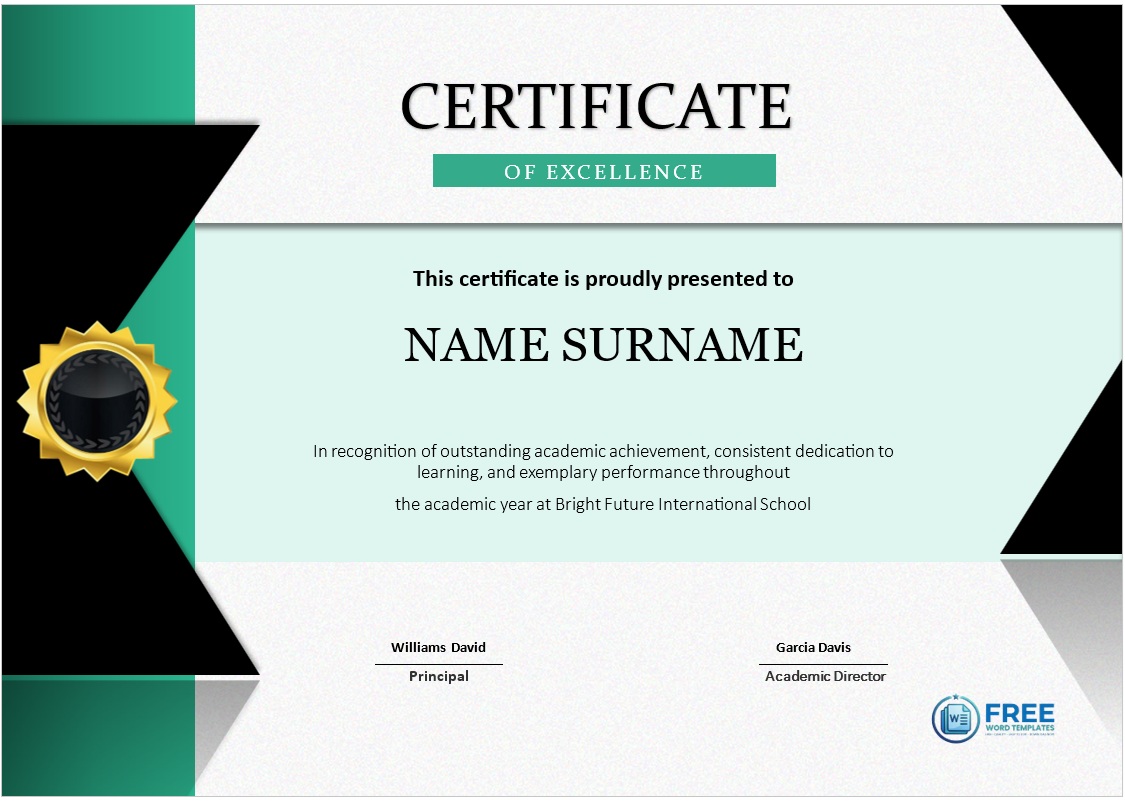
Printable Excellence Certificate Template
File Size: 3 MB
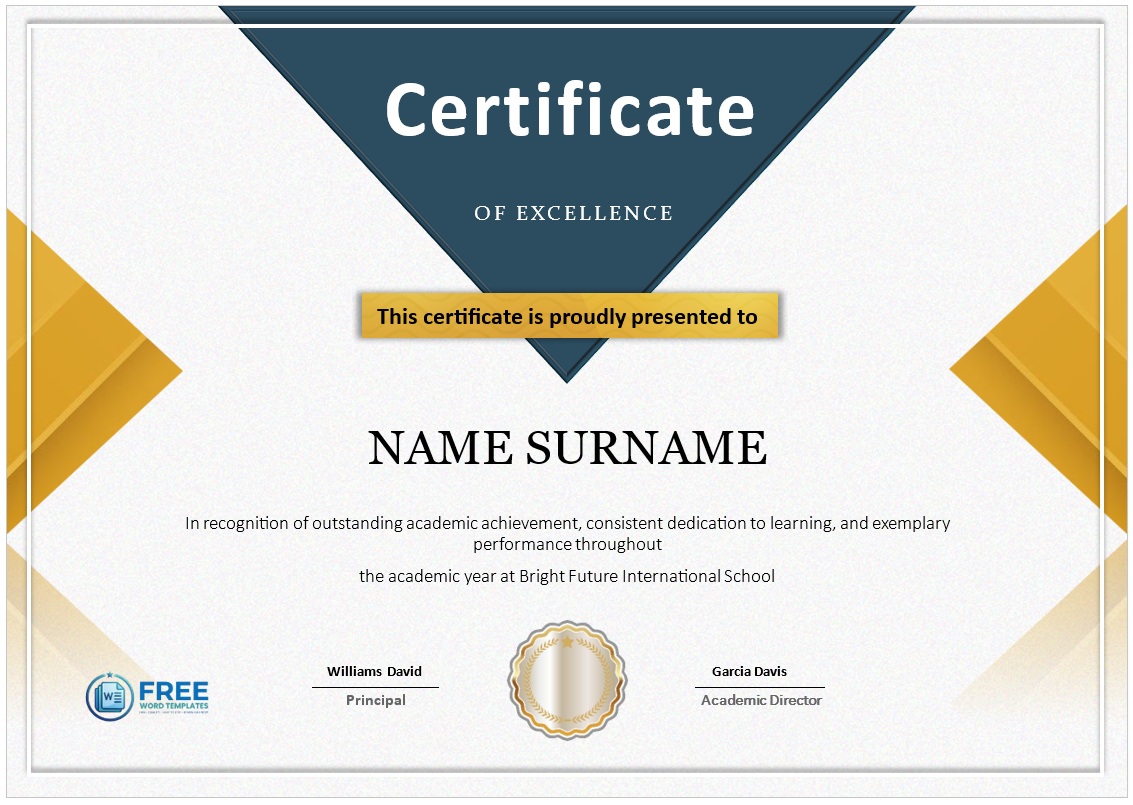
Outstanding Performance Certificate Template
File Size: 5 MB
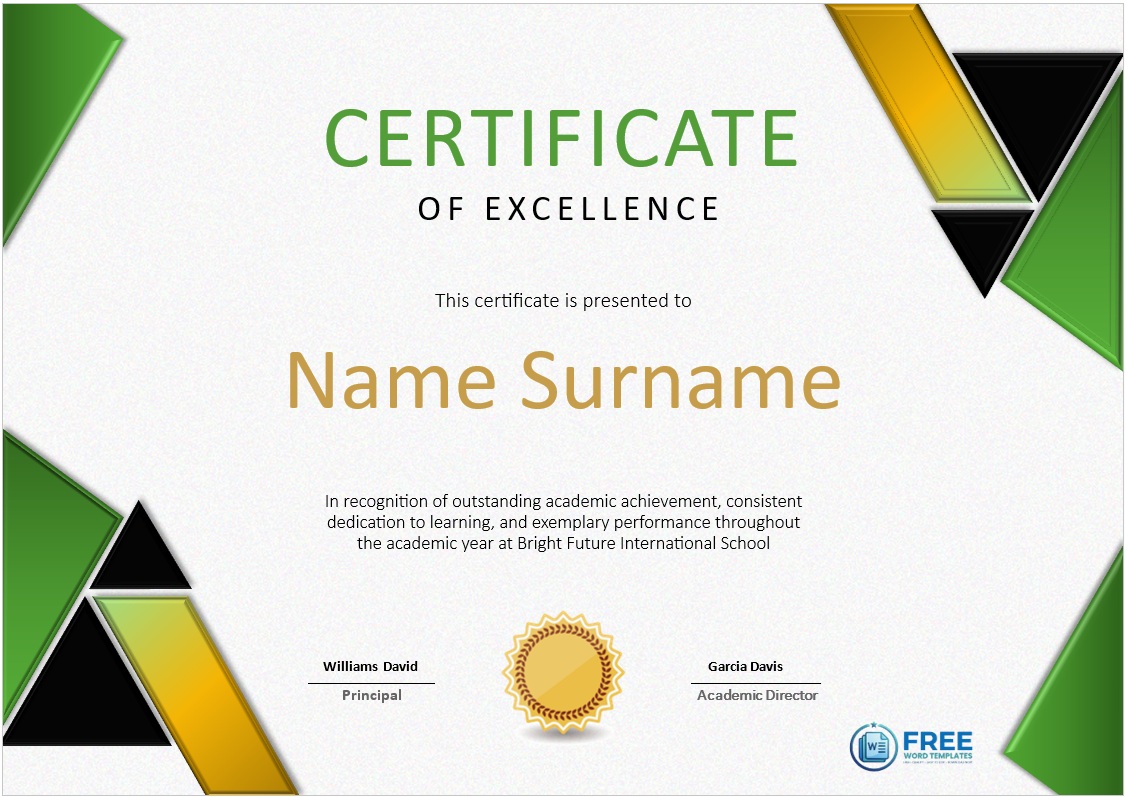
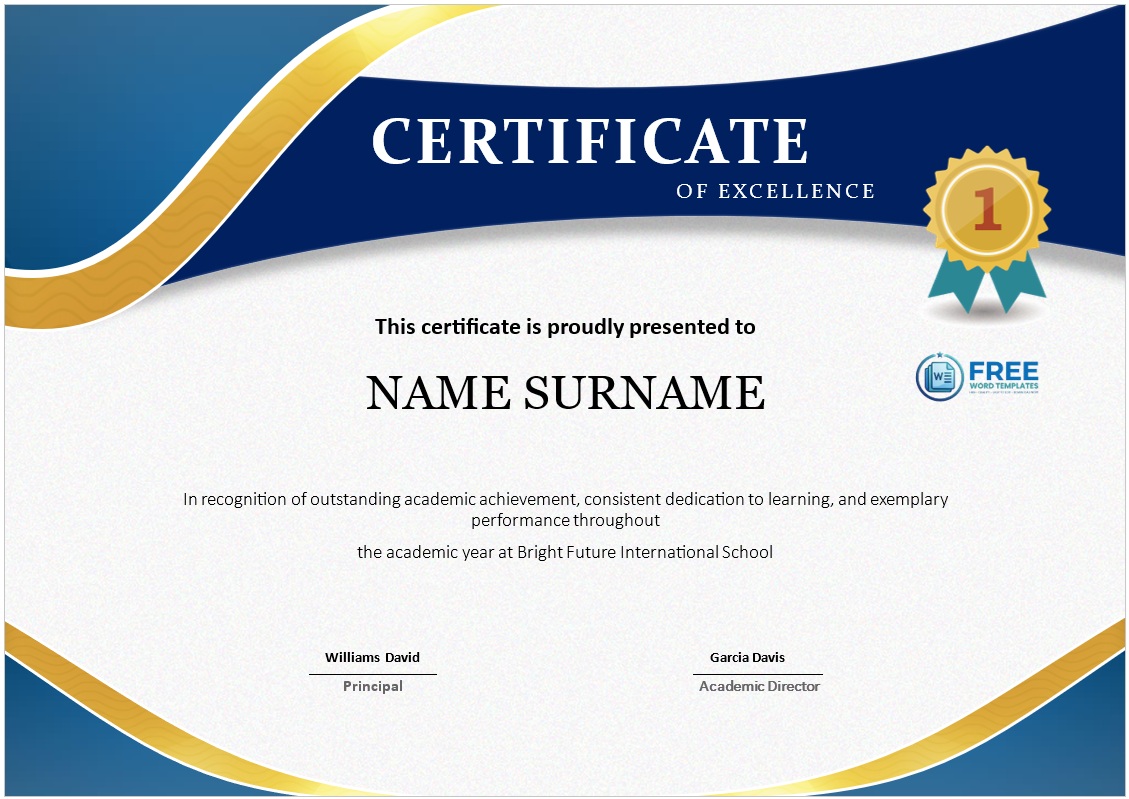
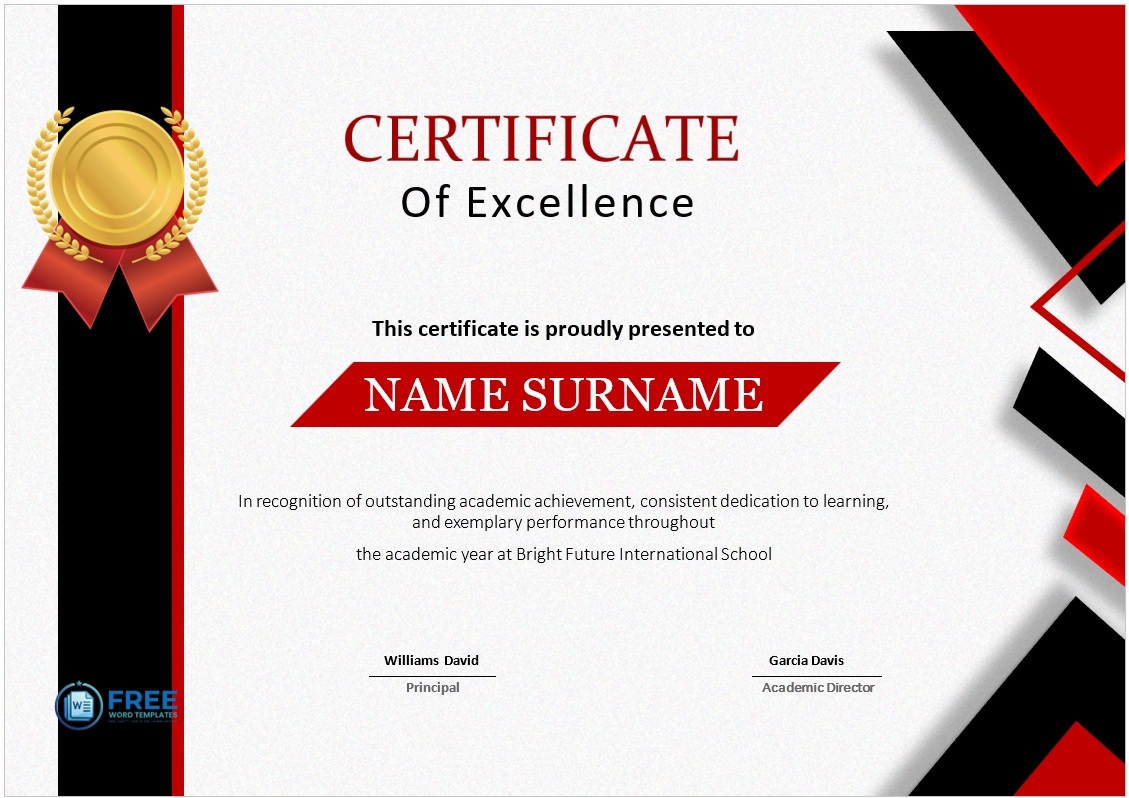
Achievement Excellence Certificate Template
File Size: 3 MB
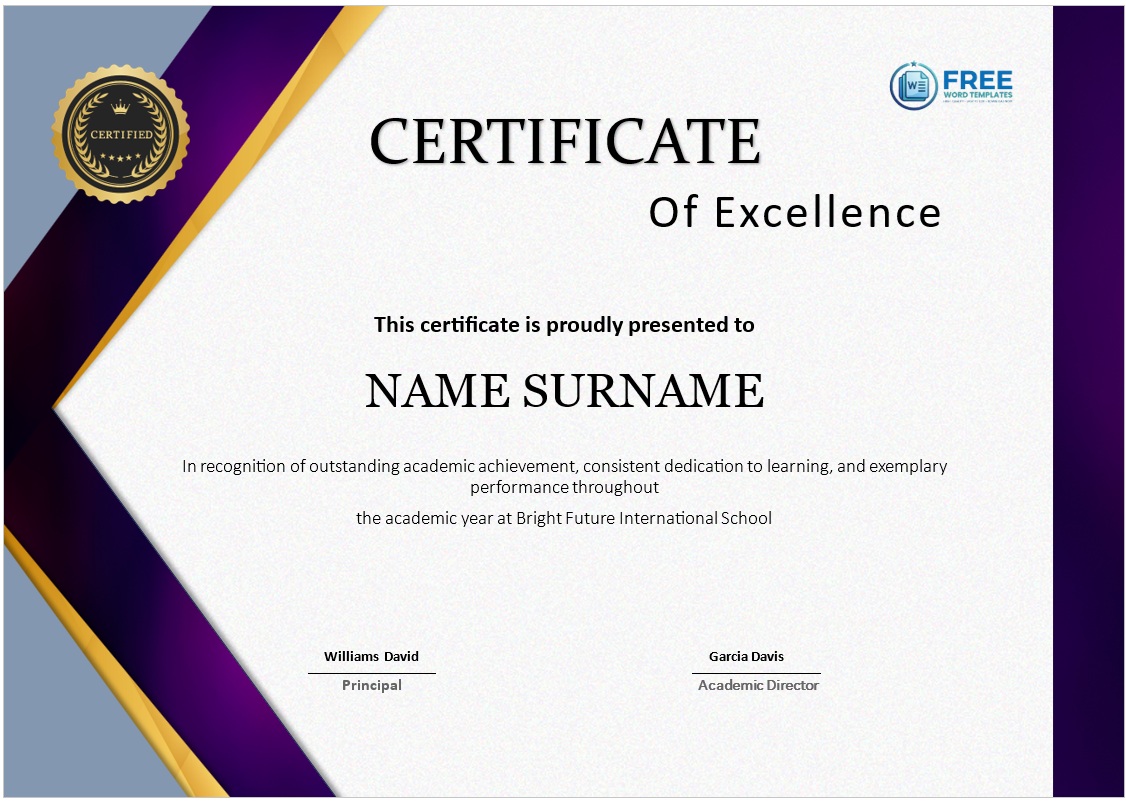


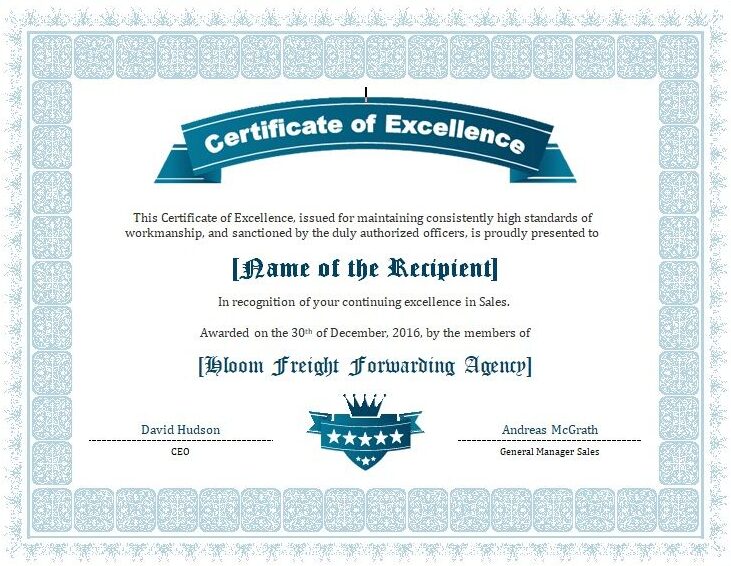
Academic Excellence Certificate template
File Size: 1020 KB
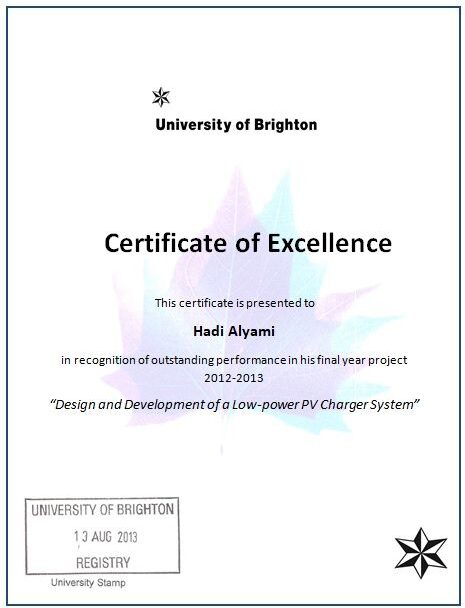

Recognition Certificate for Academic Excellence
File Size: 429 KB


Marketing Excellence Certificate Template
File Size: 81 KB


Wording by Field
Academic
…for excellence in [subject] throughout the [year] academic year.
…for sustained outstanding work in [subject], and for raising the standard of discussion in every lesson.
…for achieving the highest overall result in [subject] across the year group.
…for excellence in independent study and research.
Sales
…for excellence in new business development, exceeding target in all four quarters of [year].
…for the highest client retention rate in the division, at [X]%.
…for excellence in account management, growing the [client] account by [X]% over two years.
Customer service
…for excellence in customer service, maintaining the highest satisfaction score in the team throughout [year].
…for handling our most difficult escalations with patience and good humour, consistently.
…for [X] months without a single upheld complaint.
Teaching
…for excellence in classroom practice throughout the [year] school year.
…for excellence in pastoral care, and for being the person pupils go to.
…for excellence in curriculum development, and for sharing it generously with colleagues.
Clinical and care
…for excellence in patient care throughout [year].
…for sustained excellence in [specialty] nursing practice.
…for excellence in care, shown most clearly on the days when it was hardest.
Safety and operations
…for excellence in safety leadership, and for [X] months without a lost-time incident.
…for excellence in operational delivery, achieving [X]% on-time performance across [year].
…for excellence in quality, reducing defects from [X] to [Y] over twelve months.
Whatever the field, put a number or a named project in the citation. “Outstanding performance beyond expectation” is a phrase; “the highest satisfaction score in the team across all four quarters” is a record.
What Goes Wrong
- The citation is generic. Vague praise reads as filler, and the recipient can tell. Name the project, the metric, or the behaviour.
- The name is misspelled. The single most damaging error on a certificate, and entirely preventable — check against a personnel record, not from memory, and have a second person read it before printing.
- Too many fonts and too much decoration. Three typefaces, a heavy border and a clip-art trophy make a serious award look home-made. Two fonts, restrained border, and space around the name.
- An outdated logo or the wrong brand colours, usually because the template was saved two rebrands ago. Check it against current assets before a batch print.
- It arrives weeks late. A certificate presented long after the achievement has faded feels like an afterthought. Print on demand and present promptly.
- It over-promises. Wording that implies future rewards, guaranteed progression or benefits nobody has approved can create expectations the organization hasn’t agreed to. Keep the language about what was done, not what will follow.
- No domain named. Covered above, and it’s the difference between a certificate someone explains proudly and one they can’t.
- Everyone gets one. If the whole department receives an excellence award, it stops being excellence. Scarcity is part of the meaning.
Design and Printing
- Two fonts maximum — a serif for the title and name, a clean sans-serif for the citation and date.
- Clear hierarchy: award title largest, domain beneath it, recipient’s name largest of all or a close second, citation smaller, signatures smallest.
- Restrained colour — navy, deep green, maroon, black, or gold accents, used on the title and border rather than across the page.
- Generous margins. Space around the name is what makes a certificate look considered rather than crowded.
- Export at 300 DPI with fonts embedded, so logos stay sharp and a print shop doesn’t substitute your typeface.
- Print on 250 gsm card or heavier, matt rather than gloss — matt photographs better, and recipients photograph these.
- Sign by hand. A printed signature on a recognition document undercuts the gesture.
- Present it publicly and read the citation aloud. Thirty seconds of explanation is what turns a printed sheet into recognition.
For building your own design from scratch, see our blank certificate templates.
Frequently Asked Questions
What is a certificate of excellence?
An award recognising sustained high-quality work in a particular field, over a period rather than at a single moment — academic excellence, sales excellence, excellence in customer service, and so on.
What is the difference between excellence and achievement?
Achievement marks one specific accomplishment you could date to a moment. Excellence marks consistently high work across a period, in a named field. The same person might earn both in a year, for different things.
What should a certificate of excellence say?
The award title with the domain named — “Excellence in Customer Service” rather than just “Certificate of Excellence” — the recipient’s name, a citation of one or two sentences with a figure or project in it, the period covered, the date, and an authorised signature.
How do I write a citation for an excellence award?
Name what the excellence consisted of and attach a specific detail: a satisfaction score, a retention rate, a subject result, a safety record. “Outstanding performance beyond expectation” says nothing that couldn’t be said about anyone.
Can more than one person receive a certificate of excellence?
Yes — unlike a single annual award, excellence certificates can be given to anyone meeting the standard, and in several domains at once. But if an entire department receives one, the award stops meaning anything.
What paper should an excellence certificate be printed on?
250 gsm card or heavier, matt rather than gloss, exported at 300 DPI with fonts embedded. Sign it by hand and present it publicly with the citation read out.
What is the most common mistake on award certificates?
A misspelled name, closely followed by a generic citation. Both are preventable — check names against a record rather than memory, and write the citation from something specific the person actually did.

Pete Smith is a Business Management graduate and a passionate advocate for practical, accessible resources that empower professionals and entrepreneurs to succeed. With a strong foundation in organizational strategy and operational efficiency, Pete combines academic knowledge with real-world insights to simplify complex business processes. He is the creator behind a growing online platform dedicated to offering free, high-quality documents, templates, and actionable tips designed to save time and improve productivity.