A request for proposal (RFP) is the document an organization issues when it needs work done and wants vendors to propose how they’d do it — and at what price. It describes the problem, sets out the requirements, and tells bidders how and by when to respond, so the proposals that come back can be compared fairly. The free templates below are editable MS Word files for the buying side. If you’re a vendor responding to an RFP, our project proposal templates cover the document you need to write.
RFI, RFQ, or RFP: Which One Do You Need?
Three procurement documents, used at different stages and for different questions:
- RFI — request for information. Exploratory. You’re not buying yet; you want to know who’s out there, what’s technically possible, and roughly what things cost. Use it early, before your requirements are settled.
- RFQ — request for quotation. You know exactly what you want, down to the specification, and you’re comparing suppliers on price and delivery. Little judgement involved: lowest compliant bid usually wins.
- RFP — request for proposal. You know the problem but not the best solution, and you want vendors to propose an approach. Evaluated on method, experience, and price together — which is why an RFP needs published evaluation criteria and an RFQ doesn’t.
Choosing wrongly wastes everyone’s time: issuing an RFP when you already know exactly what you want produces long proposals nobody needed, and issuing an RFQ for an open-ended problem produces quotes for the wrong thing.
What an RFP Should Contain
- About the organization — who you are, what you do, and enough context for a vendor to understand the environment they’d be working in.
- Statement of need — the problem or opportunity, stated as an outcome rather than a shopping list. “Our support team can’t meet a 12-hour response target with current tooling” tells a vendor more than “we need a ticketing system.”
- Scope of work and requirements — what’s in scope, what’s explicitly out, and any mandatory technical, regulatory, or compatibility requirements. Separate must-haves from nice-to-haves; vendors price them very differently.
- Deliverables — what you expect to receive, and in what form.
- Timeline — the procurement schedule and the project schedule. See the example below.
- Submission requirements — required proposal sections, page or word limits, file format, how and where to submit, and a single named contact for all questions.
- Evaluation criteria and weightings — how proposals will be scored. See the section below; this is the part most RFPs skip.
- Budget information — a range, a ceiling, or at minimum the pricing structure you want quoted (fixed price, day rate, milestone-based).
- Vendor qualifications — references, relevant experience, certifications, insurance, financial standing, and any compliance requirements.
- Terms and conditions — contractual terms, payment terms, IP ownership, confidentiality, and any standard clauses a winning vendor would have to accept.
The RFP Timeline
Every RFP needs a schedule, and stating it up front is what makes the process manageable for both sides:
| Stage | Date |
|---|---|
| RFP issued | 7 September 2026 |
| Deadline for vendor questions | 18 September 2026 |
| Answers published to all bidders | 23 September 2026 |
| Proposals due (17:00 local time) | 9 October 2026 |
| Shortlist notified | 20 October 2026 |
| Shortlist presentations | 27–29 October 2026 |
| Contract awarded | 6 November 2026 |
| Project starts | 1 December 2026 |
Give vendors a realistic response window — two to four weeks for most work, longer for complex or technical bids. A one-week deadline doesn’t get you faster answers; it gets you recycled boilerplate from whoever had a proposal lying around.
Free Request for Proposal Templates in MS Word
Each template below is editable in Word. Work through the sections above, delete what doesn’t apply, and keep the evaluation criteria and timeline — they’re what make responses comparable.
Simple Request for Proposal Template

A short-form RFP covering background, scope, timeline, submission instructions, and evaluation criteria — for straightforward procurements.

Formal RFP Template with Evaluation Matrix

A full-length format including detailed requirements, weighted scoring criteria, vendor qualification questions, and terms and conditions.

The download link for this Request For Proposal Template 04 is here,

You can download this Request For Proposal Template 03 from the link below,

Please find the download link for this Request For Proposal Template 02 below,

You can download this Request For Proposal Template 01 by clicking the download button below,
Free Request For Proposal Templates
Our templates are very useful in making the process of creating the request for a proposal easier for people who cannot have the time to sit down and compose a good proposal. They can save a lot of time as well as energy.
Also, it is very convenient since you can use the templates anytime you need to make a request for a proposal. So what are you waiting for? Download today for free of cost.

Click on this download button and easily grab this Request for Proposal Template.

Click on this download button and easily grab this Request for Proposal Template.

Click on this download button and easily grab this Request for Proposal Template.

Click on this download button and easily grab this Request for Proposal Template.
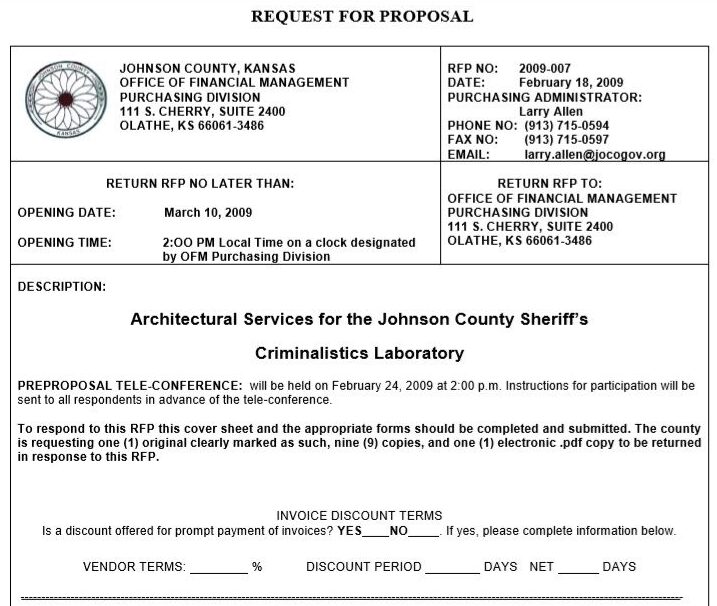
Click on this download button and easily grab this Request for Proposal Template.

Click on this download button and easily grab this Request for Proposal Template.
Evaluation Criteria: The Section Most RFPs Leave Out
Publishing how you’ll score proposals — with weightings — is the single change that most improves the responses you get. For example: technical approach 35%, relevant experience and references 25%, price 30%, implementation timeline 10%.
It works for three reasons. Vendors write to what you’re actually measuring instead of guessing, so proposals become comparable. Bidders who can’t compete on your priorities self-select out, saving both sides the effort. And when you award the contract, the decision is defensible — internally to your own stakeholders, and externally to the vendors who lost. If your organization is bound by public procurement rules, published criteria are usually mandatory anyway; if it isn’t, they’re still the difference between a selection and an argument.
One caution: score against the criteria you published, in the weights you published. Changing the basis after proposals arrive is how procurement processes get challenged.
Running a Fair Process
- Name a single point of contact for all vendor questions, and route everything through them.
- Collect questions by a deadline, then publish every question and answer to all bidders — including the ones only one vendor thought to ask. This is standard practice and the clearest signal that the process is honest.
- State the budget or a range. Withholding it rarely produces cheaper bids; it produces proposals scoped at the wrong size, which you then have to re-scope anyway.
- Say how many vendors you’re inviting, if you know. Serious bidders decide where to spend their proposal effort partly on the odds.
- Tell unsuccessful vendors promptly, and offer brief feedback. It costs an email and it’s why good vendors bid for your work again.
Frequently Asked Questions
What is a request for proposal?
A document issued by an organization that describes a need and invites vendors to propose how they would meet it, with pricing. It sets out requirements, timelines, submission rules, and how proposals will be evaluated.
What is the difference between an RFP, an RFQ, and an RFI?
An RFI gathers information early, before requirements are fixed. An RFQ compares prices when you already know exactly what you want. An RFP asks vendors to propose an approach to a problem, and is scored on method and experience as well as price.
What should an RFP include?
Organization background, statement of need, scope and requirements, deliverables, timeline, submission instructions, evaluation criteria with weightings, budget information, vendor qualifications, and terms and conditions.
Should an RFP state the budget?
Usually yes — a range or ceiling. Vendors scope proposals to the money available, so withholding it produces bids at the wrong size rather than cheaper bids, and wastes the effort of vendors who were never going to fit.
How long should vendors get to respond to an RFP?
Two to four weeks for most procurements, and longer for complex technical or construction work. Short deadlines filter for availability rather than quality — you’ll mostly receive proposals that were already written.
Who writes the RFP?
The buying organization — typically procurement together with the team that will use the service, since the requirements have to be right. Vendors write the response, not the RFP.

Pete Smith is a Business Management graduate and a passionate advocate for practical, accessible resources that empower professionals and entrepreneurs to succeed. With a strong foundation in organizational strategy and operational efficiency, Pete combines academic knowledge with real-world insights to simplify complex business processes. He is the creator behind a growing online platform dedicated to offering free, high-quality documents, templates, and actionable tips designed to save time and improve productivity.