A lesson plan is the teacher’s working document for a single lesson: what students should be able to do by the end, how you’ll get them there, and how you’ll know it worked. Written well it takes fifteen minutes and saves the lesson; written as a list of activities it’s a timetable with extra steps. The free templates below are editable MS Word files covering daily, weekly, and subject-specific formats, and beneath them you’ll find a filled-in example and the planning approach that makes the difference.
What Goes in a Lesson Plan
- Lesson details — subject, class or year group, date, duration, and room.
- Learning objectives — what students will be able to do by the end, stated so you could actually check it. This is the field everything else hangs from.
- Curriculum or standards reference, where your school or authority requires it.
- Prior knowledge assumed — what students need to already know for this lesson to land.
- Materials and resources — handouts, equipment, slides, anything to prepare or book in advance.
- Lesson sequence with timings — starter, main teaching, practice, plenary, each with minutes allocated.
- Differentiation — how you’ll support students who’ll struggle and extend those who finish early.
- Assessment — how you’ll check during the lesson whether learning is happening, not just at the end.
- Homework, if set, with what it’s for.
- Reflection — a few lines completed after teaching. The most valuable section on the page, and the one everyone leaves blank.
Objectives First, Activities Last
The most common way a lesson plan goes wrong is being built in the wrong order: choose an activity that looks good, write it up, then reverse-engineer an objective to justify it. The result is a lesson that’s busy rather than productive.
Plan backwards instead, in three steps:
- What will students be able to do by the end? Write it as an outcome you could observe — “identify three causes of coastal erosion and explain how each one works,” not “learn about coastal erosion.” Verbs like identify, explain, compare, calculate, justify can be checked; understand, know, appreciate can’t.
- How will I know they can do it? Decide the evidence before you decide the activity — three exit-ticket questions, a diagram they annotate, a paragraph they write. If you can’t name the evidence, the objective is too vague.
- What activity gets them there? Now choose, knowing exactly what the activity has to produce.
Done this way, a plan answers the only question that matters at the end of the lesson: did they learn it? A plan built activity-first can only answer whether you got through the material.
Lesson Plan Example
|
LESSON PLAN Subject: Geography | Class: Year 8 | Date: 16 September 2026 | Duration: 55 min Teacher: A. Bello | Topic: Coastal erosion |
||
Learning objectives — by the end, students will be able to:
|
||
|
Prior knowledge: Wave formation and the difference between constructive and destructive waves (covered last lesson). Materials: Cliff photograph set (×16), annotation worksheet, mini whiteboards, exit tickets. |
||
| Time | Activity | Assessment / check |
|---|---|---|
| 5 min | Starter: Two cliff photos, ten years apart. “What’s changed, and what could have caused it?” Pairs, then share. | Listening for prior vocabulary; note misconceptions. |
| 12 min | Teach: Four erosion processes with diagrams — hydraulic action, abrasion, attrition, solution. | Mini whiteboards: “which process is this?” ×4. |
| 15 min | Guided practice: Annotate the cliff photograph together, first two labels modelled on the board. | Circulate — check every student has labelled at least two correctly. |
| 15 min | Independent: Second photograph, annotate alone, then write one sentence justifying one label. | Collect worksheets — objective 3 evidence. |
| 8 min | Plenary: Exit ticket — name the four processes, explain one in a sentence. | Exit tickets — objectives 1 and 2 evidence. |
|
Differentiation: Support — word bank with the four processes and key terms; photographs pre-labelled with arrows for three students. Extension — second photo includes a stack and stump; students explain the sequence of formation. If short on time: drop the second annotation, keep the exit ticket. |
||
|
Homework: Six-mark question — “Explain how a headland is eroded to form a cave, arch and stack.”
Reflection (after teaching): ________________________________________________ |
||
Three features do the work here. Every objective has a named piece of evidence in the assessment column, so nothing is assumed. The differentiation is specific — a word bank for named students, a harder photograph for the fast finishers — rather than “support as needed.” And there’s a line saying what to cut if time runs short, decided in advance rather than in the last five minutes.
Free Lesson Plan Templates in MS Word
Each template below is editable in Word. Save a master copy with your school header and class details filled in, and start each lesson from that.

Here is the download button for this Lesson Plan Template 01.

Check out the preview of this wonderful Lesson Planning Template in MS Word format to quickly assist you in planning your own lessons easily.
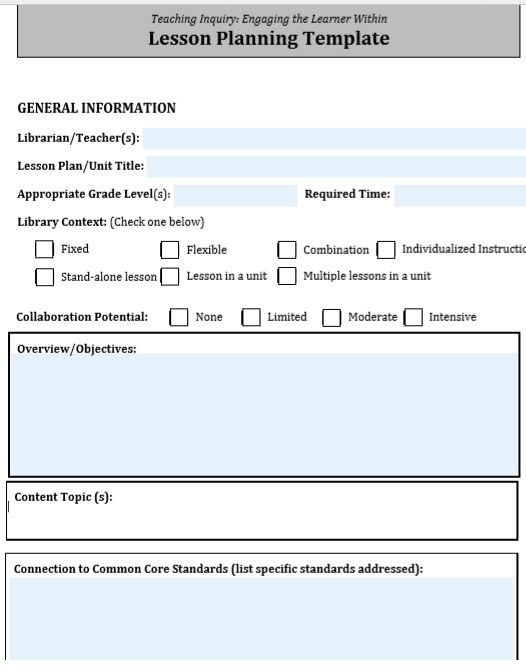
Here is the download button for this Lesson Plan Template 02.
Below is a more detailed Lesson Plan Template in tabular format to help you with your daily lesson delivery effectively.

Here is the download button for this Lesson Plan Template 03.
Following is a Science Lesson Plan Template in MS Word format to help you quickly create your own Lesson Plan easily.

Here is the download button for this Lesson Plan Template 04.
Another useful and quick lesson plan template in MS Word.
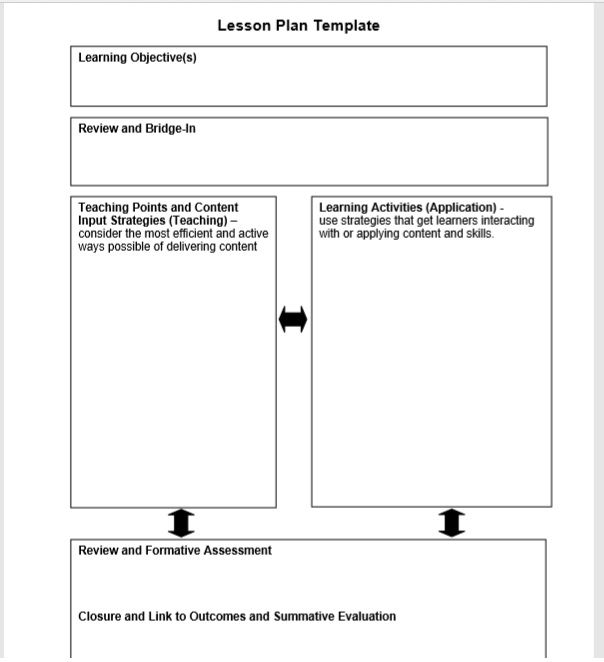
Here is the download button for this Lesson Plan Template 05.
The Blank Lesson Plan Template

Here is the download button for this Lesson Plan Template 06.
Detailed Lesson Plan Template

Here is the download button for this Lesson Plan Template 07.
Quick-Edited Lesson Plan Template

Here is the download button for this Lesson Plan Template 08.
Co-Teaching Lesson Plan Template

Here is the download button for this Lesson Plan Template 09.
Learning Lesson Plan Template

Here is the download button for this Lesson Plan Template 10.
Simple Lesson Plan Template

Here is the download button for this Lesson Plan Template 11.
Planning Frameworks
Most lesson structures are variations on a few well-established models. Use whichever your school works to, or pick the one that suits the material:
- Gradual release — “I do, we do, you do.” The teacher models, the class practises together, then students work alone. Straightforward, effective for skills and procedures, and the structure the example above follows.
- The 5 Es — Engage, Explore, Explain, Elaborate, Evaluate. Common in science teaching. Students investigate before the explanation rather than after, which suits enquiry-led topics.
- Starter, main, plenary. The simplest framing, and adequate for most lessons. Its weakness is the plenary, which is the first thing to get squeezed — protect it, because it’s usually where the assessment lives.
The framework matters less than using one consistently. A class that recognizes the shape of a lesson spends less energy working out what’s happening and more on the content.
Differentiation That Isn’t Just a Box
“Differentiation: support as needed” is the most common empty field in lesson planning. Filled in properly it names what, and for whom:
- Support — a word bank, a partly completed worksheet, a worked example to refer to, pairing with a stronger partner, or pre-teaching key vocabulary before the lesson.
- Extension — a harder variant of the same task rather than more of it. Students who finish early and get given additional identical questions learn that working quickly is punished.
- Access — larger print, a copy of the board notes, extra time, a scribe, or seating adjustments for particular students.
Naming individual students in the plan is fine and useful — it’s a working document, not a display piece. Keep any sensitive detail out of it, though: note the adjustment, not the diagnosis.
Timing, and the Over-Planning Problem
Everyone over-plans, and it’s the right error to make — running out of material is worse. But a plan that assumes everything runs to the minute produces rushed endings, and the ending is where the learning gets checked.
Three habits help. Allocate minutes, not just order — writing “15 min” next to an activity forces a realistic judgement that writing “guided practice” doesn’t. Decide in advance what gets cut, as the example does, so the decision isn’t made under pressure. And protect the plenary — five minutes of checking what students actually took away is worth more than five extra minutes of activity, because without it you’re planning the next lesson on a guess.
Types of Lesson Plan
- Daily lesson plan — one lesson in detail, as above. The everyday format.
- Weekly plan — an overview of the week’s lessons on one page, showing how they build. Useful for your own sequencing and for anyone covering your class.
- Unit or scheme of work — a term or topic mapped across several weeks, with objectives distributed and assessment points marked.
- Subject-specific formats — science plans with equipment and safety notes, PE with space and equipment setup, languages with target-language exposure planned in.
- Co-teaching plans — two columns, one per teacher, so roles are agreed before the lesson rather than negotiated during it.
- Emergency or substitute plans — written in advance for a cover teacher who doesn’t know the class. These need more detail than your own plans, not less: full instructions, where the materials are, seating notes, and a task students can complete independently.
Frequently Asked Questions
What should a lesson plan include?
Lesson details, learning objectives, prior knowledge assumed, materials, a timed sequence of activities, differentiation, assessment, homework if set, and a reflection section to complete after teaching.
How do I write learning objectives?
State what students will be able to do by the end, using a verb you can observe — identify, explain, compare, calculate, justify. Avoid “understand,” “know,” and “appreciate,” which can’t be checked. Two or three objectives per lesson is usually enough.
What is backward design in lesson planning?
Deciding the objective first, then the evidence that would show it was met, and only then the activity. It prevents the common problem of choosing an engaging activity and fitting an objective around it afterwards.
What are the 5 Es?
Engage, Explore, Explain, Elaborate, Evaluate — a lesson structure common in science teaching where students investigate a phenomenon before the explanation is given, rather than after.
How long should a lesson plan be?
One page for a single lesson. If it runs longer you’re writing a script rather than a plan — and a plan you can’t take in at a glance mid-lesson isn’t much use when you need it.
What is a substitute or emergency lesson plan?
A lesson prepared in advance for a cover teacher who doesn’t know your class or subject. It needs more detail than your own plans — full instructions, where materials are kept, seating and behaviour notes, and a task students can complete without specialist input.
How do I differentiate a lesson plan?
Name the support and the extension specifically: a word bank or partly completed worksheet for students who’ll struggle, and a harder variant of the same task — not more of it — for those who finish early. Note access adjustments separately, recording the adjustment rather than any sensitive detail behind it.

Pete Smith is a Business Management graduate and a passionate advocate for practical, accessible resources that empower professionals and entrepreneurs to succeed. With a strong foundation in organizational strategy and operational efficiency, Pete combines academic knowledge with real-world insights to simplify complex business processes. He is the creator behind a growing online platform dedicated to offering free, high-quality documents, templates, and actionable tips designed to save time and improve productivity.