A sponsorship proposal asks a business to fund your event, team, or programme — and explains what they get for it. The free templates below are editable MS Word files, and beneath them you’ll find how to structure the proposal, a worked example of sponsorship packages and pricing, and the single change that turns a proposal marketing managers ignore into one they answer.
A Sponsorship Proposal Is Not a Donation Request
This is the distinction that decides whether your proposal gets a reply.
A donation is charitable giving. The organization gives money because your cause is worthwhile, the decision is usually made by an owner or a charitable committee, and gratitude is the return.
Sponsorship is a commercial transaction. It comes out of a marketing budget, it’s approved by someone with targets to hit, and the sponsor expects something measurable back — exposure to a defined audience, association with something their customers care about, direct access to potential buyers, or content and data they can use.
Most rejected proposals fail because they’re donation requests carrying a sponsorship title. They open with the organization’s history, explain how important the work is, state how much money is needed, and finish with a thank you. A marketing manager reads that and sees a cost with no return.
The fix is structural rather than cosmetic: lead with what the sponsor gets, not with what you need. Your cause matters, and it belongs in the proposal — but it’s the context, not the pitch.
What You’re Actually Selling
Your audience. That’s what a sponsor is buying access to, and it’s the section most proposals either skip or fill with adjectives.
Replace “a large and enthusiastic crowd” with numbers:
- Attendance — last year’s figure, and this year’s projection with the basis for it.
- Who they are — age range, where they travel from, families or adults, local residents or visitors. Anything you can support from ticket data, a survey, or registrations.
- Reach beyond the day — social followers, email subscribers, newsletter open rate, website visits in the month before the event.
- Media — local press, radio coverage, anything from previous years.
- Dwell time — how long people are on site. A six-hour festival is worth far more to a sponsor than a two-hour presentation, and most proposals never mention it.
If you don’t have these numbers, get them before writing the proposal — a survey at your last event, or ticket data you already hold. A proposal with real figures, even modest ones, outperforms one with impressive adjectives every time. Two hundred confirmed local families is a proposition; “a great turnout” isn’t.
Sponsorship Packages
Give sponsors a choice of levels with clear prices and clear deliverables. It lets them self-select, it makes the ask concrete, and it avoids the awkward negotiation that follows an open-ended request.
| SPONSORSHIP PACKAGES | Riverside Summer Festival, 11 July 2027 | Expected attendance 2,400 | |||
| Bronze £250 |
Silver £750 |
Gold £2,000 |
|
|---|---|---|---|
| Logo on event programme | ? | ? | ? full page |
| Logo on website sponsor page | ? | ? linked | ? homepage |
| Social media posts (12k followers) | 1 group post | 3 dedicated | 6 dedicated |
| Banner on site | — | 1 (you supply) | 3, incl. main stage |
| Stall or activation space | — | 3m × 3m | 6m × 3m, prime position |
| Mention in press release | — | ? | ? named partner |
| Stage announcements | — | 2 | 6 + opening welcome |
| Event tickets for staff | 2 | 6 | 15 |
| Post-event report with photos | ? | ? | ? with reach figures |
| Packages can be combined or tailored. Naming rights for individual attractions (main stage, children’s zone, fun run) available separately — please ask. | |||
Two things this table does. Every line is specific and checkable — “6 dedicated posts to 12k followers,” not “social media promotion.” And the post-event report appears at every level, which signals you’ll account for the money — the detail that most distinguishes a serious proposal from a hopeful one.
What Goes in the Proposal
- One-page summary — what the event is, when, the audience size, and the packages available. Some sponsors will read only this.
- About us — short. Two or three paragraphs establishing that you’re credible and have done this before.
- The audience — the numbers section above. This is the heart of the document.
- Why this fits you — the tailored paragraph explaining why this sponsor’s customers are your audience. Generic proposals fail here.
- Packages and pricing — the table.
- Previous sponsors and results — who backed you before, and what they got. The strongest section if you have it.
- The ask and next steps — which package you’re proposing, the deadline for confirming, and what happens when they say yes.
- Contact details — a named person with a direct line.
Free Sponsorship Proposal Templates in MS Word
Each template below is editable in Word. Fill in your audience numbers first — that section shapes everything else in the document.
Event Sponsorship Proposal Template
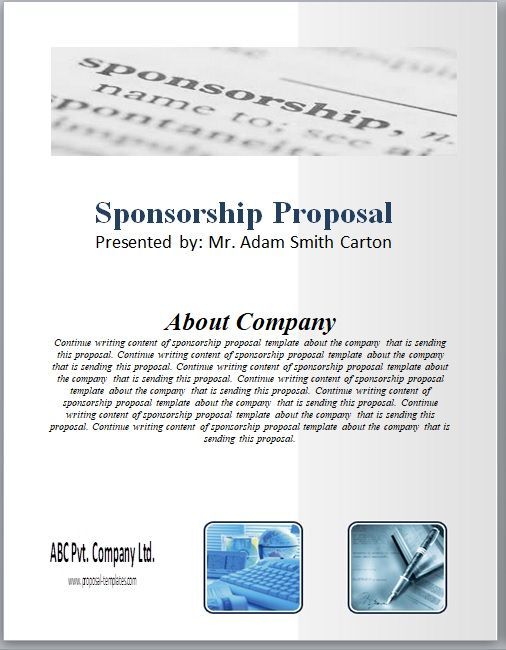
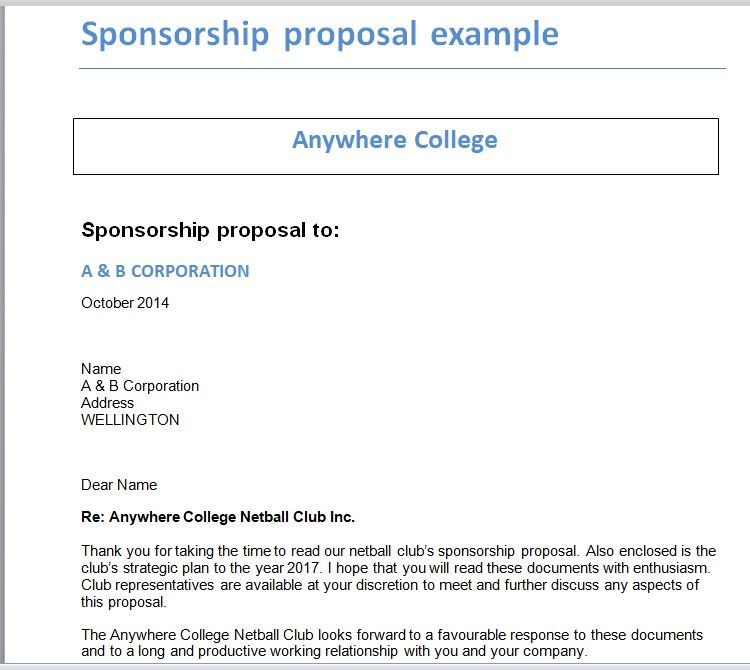
A full proposal with audience section, package table, and previous-sponsor results — for festivals, fairs, and community events.

Sports Team Sponsorship Proposal Template
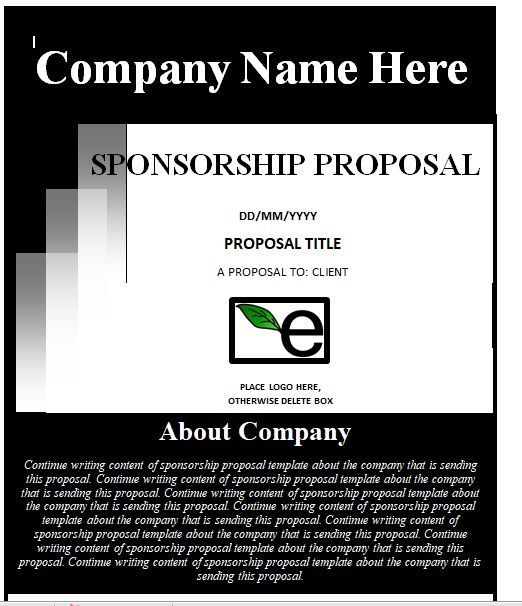
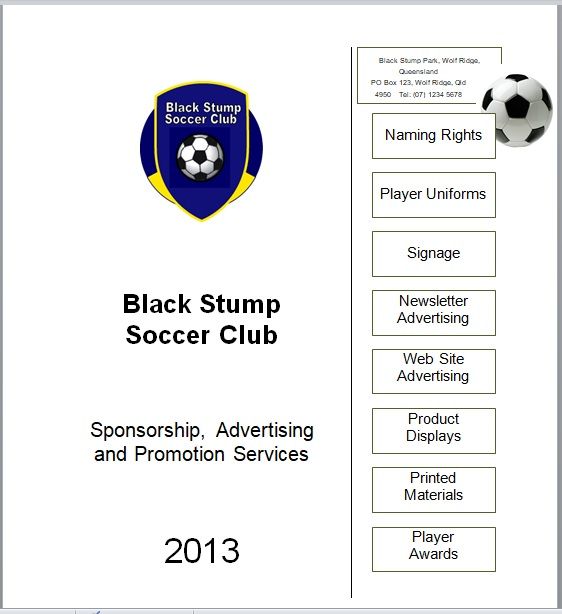
Structured around a season rather than a single date — fixtures, match-day attendance, kit and ground branding, and social reach.

Approaching Sponsors
- Research before you write. Look at what the company already sponsors, who their customers are, and whether they have a stated community or CSR focus. Five minutes of research produces the tailored paragraph that makes the difference.
- Tailor every proposal. The same document emailed to forty businesses performs worse than eight properly targeted ones. Sponsors can tell instantly, and a generic proposal signals you haven’t thought about what they’d get.
- Start three to six months ahead. Marketing budgets are usually set annually and allocated early. A proposal arriving three weeks before the event is asking for money that has already been spent.
- Find the right person. For anything beyond a small local business, that’s marketing, community relations, or a sponsorship manager — not the owner, and not a general enquiries address.
- Ask for a conversation, not a cheque. “Could I take fifteen minutes to talk through what we’re planning?” gets more yeses than an attached PDF and a number.
- Follow up once, politely, after about ten days. Most proposals aren’t rejected — they’re buried.
- Make saying yes easy. Name the package, the amount, the deadline, and the single next step.
In-Kind Sponsorship
Not every sponsor gives cash, and for many small businesses goods or services are easier to approve than a cheque — it comes out of stock rather than budget.
Worth asking for: prizes for a raffle or tombola, food and drink, printing, venue or equipment hire, marquees and staging, professional services (photography, design, legal), transport, or staff time. A local printer producing your programmes free is worth exactly as much as the cash you’d have spent on them.
Value in-kind support at its retail price in your proposal and your accounts, and offer the same recognition you would for the equivalent cash. And mention in-kind options explicitly — plenty of businesses that would decline a cash request will happily supply goods, but only if you ask.
After the Event: The Report That Wins the Renewal
The most neglected step in sponsorship, and the cheapest way to secure next year’s support.
Within two weeks, send every sponsor a short report: attendance achieved against projection, photographs showing their branding in place, social media reach with the actual figures, any press coverage, and a genuine thank you. Two pages is plenty.
It matters because your contact has to justify the spend internally. Handing them the evidence makes their conversation easy — and a sponsor who can demonstrate a return is a sponsor who renews without being persuaded. Most organizations never send one, which is precisely why sending one works.
Planning the event itself? Our event planner templates cover the running order, event tickets handle admissions, and raffle tickets suit fundraising on the day. For a project rather than an event, see our project proposal templates.
Frequently Asked Questions
What is a sponsorship proposal?
A document asking a business to fund an event, team, or programme, setting out what the sponsor receives in return — exposure to a defined audience, branding, access, and hospitality — usually across several priced packages.
What is the difference between sponsorship and a donation?
A donation is charitable giving with no expected return. Sponsorship is a commercial arrangement paid from a marketing budget, where the sponsor receives measurable benefits. They’re approved by different people using different criteria, so a proposal written as one rarely succeeds as the other.
How do I write a sponsorship proposal?
Lead with your audience — who they are and how many — then set out priced packages showing exactly what each level receives, add a tailored paragraph on why this sponsor’s customers match your audience, and close with a specific ask and deadline.
What should sponsorship packages include?
Specific, checkable benefits: logo placement with the exact location, a stated number of social posts with your follower count, banner space, stall space with dimensions, stage mentions, tickets, and a post-event report. Avoid vague terms like “promotion” or “brand exposure.”
How much should I charge for sponsorship?
Base it on what the sponsor receives rather than what you need to raise. Consider audience size, dwell time, exclusivity, and what comparable local events charge. Three tiers works well — most sponsors choose the middle one.
How far in advance should I approach sponsors?
Three to six months for most events, and longer for larger companies whose budgets are set annually. Proposals arriving weeks before an event are competing for money that has already been allocated.
What is in-kind sponsorship?
Support given as goods or services rather than cash — prizes, printing, catering, venue hire, equipment, or professional time. It’s often easier for a small business to approve than a cash payment, and it should be valued and acknowledged the same way.

Pete Smith is a Business Management graduate and a passionate advocate for practical, accessible resources that empower professionals and entrepreneurs to succeed. With a strong foundation in organizational strategy and operational efficiency, Pete combines academic knowledge with real-world insights to simplify complex business processes. He is the creator behind a growing online platform dedicated to offering free, high-quality documents, templates, and actionable tips designed to save time and improve productivity.