A medical certificate is a statement by a registered health practitioner about a patient’s condition, fitness for work or study, or need for absence. It carries weight with employers, schools, insurers and courts precisely because a named, registered clinician has put their signature to it. This page sets out the standard format, the fields a certificate must contain to be useful, and the wording conventions for fitness, restriction and absence.
A medical certificate has effect only when issued and signed by a registered practitioner.
A template supplies layout, not authority. The document’s standing comes from the clinician who examined the patient, signed it, and recorded their registration number — and issuing or presenting a certificate without that basis is a serious matter in every jurisdiction, potentially both a criminal offence and grounds for professional sanction. The formats below are for practitioners and clinic administrators preparing their own documentation.
Who Issues One
Certificates are normally issued by a registered medical practitioner. Depending on the jurisdiction and the purpose, other registered professionals may issue them within their scope — dentists for dental matters, physiotherapists for musculoskeletal rehabilitation, occupational health physicians for fitness assessments, psychiatrists and clinical psychologists for mental health, and in some countries registered nurses or pharmacists for short-term absence.
Two practical points. The certificate should be issued by the clinician who actually assessed the patient, and it should state whether the assessment was in person, by telephone or by video — some employers and insurers treat these differently. And it should be issued on the practice’s own letterhead or template, with the practice address and contact details, so that the recipient can verify it if they need to.
Types of Medical Certificate
- Sick leave / absence certificate — confirms a patient was unable to attend work or study, and for what period. Focused on duration rather than capability.
- Fitness to work — states whether a patient is fit, unfit, or fit with specified restrictions. Usually requested after injury, surgery or prolonged absence.
- Return to work / clearance — confirms a patient may resume duties, with any phased return or adjustments noted.
- School or academic — excuses absence from classes or examinations, and may confirm fitness to resume, including for sport.
- Travel or medical clearance — fitness to fly, fitness for a specific activity, or confirmation of vaccination status.
- Maternity — confirms pregnancy, expected date of delivery, and any work restrictions.
- Occupational health — confirms health surveillance has been completed and the employee is cleared for a specific role or exposure.
- Insurance and claims — supports a disability, income protection or hospitalisation claim, usually on the insurer’s own form.
Many jurisdictions prescribe a statutory form for at least some of these — the UK’s fit note for statutory sick pay, for example. Where a statutory form exists, use it. A general template is for situations where no prescribed form applies.
Required Fields
Practice and practitioner
- Practice or clinic name, address and telephone number
- Practitioner’s full name and qualifications
- Registration or licence number — the field that allows verification, and the one most often omitted
- Signature and date of signing
- Practice stamp, where used
Patient
- Full name, and date of birth or patient identifier
- Address, where required by the recipient
The assessment
- Date of consultation, and whether it was in person, by telephone or by video
- A statement of the clinical position at the level of detail the purpose requires — see the confidentiality section below
- The period covered, with explicit start and end dates
- The conclusion: unfit, fit, or fit with restrictions, and what those restrictions are
- Whether a further review is needed, and when
- Certificate or reference number, if the practice numbers them
The single most common cause of a certificate being sent back is a missing or ambiguous date range. “Two weeks” invites a dispute about when the clock started; “from 14 October to 27 October inclusive” does not.
Medical Certificate Example
MILL LANE MEDICAL PRACTICE
14 Mill Lane, Springfield · Tel 01000 000440
MEDICAL CERTIFICATE
| Patient: | Rosa Silva · DOB 04/11/1989 |
| Date of assessment: | 14 October 2026 · in person |
| Certificate no: | MC-2026-0418 |
I confirm that I examined the above patient on 14 October 2026.
In my opinion the patient is unfit for work from 14 October 2026 to 27 October 2026 inclusive, as a result of a medical condition for which she is receiving treatment.
Restrictions on return: On resuming work the patient should avoid lifting above 5 kg for a further two weeks.
Review: A further assessment is arranged for 26 October 2026.
| Practitioner: | Dr S. Iqbal, MBBS MRCGP |
| Registration no: | 0000000 |
| Signature: | ____________________ |
| Date signed: | 14 October 2026 |
Three features to note. The dates are explicit and inclusive, removing any argument about the period covered. No diagnosis is stated — the employer is told the patient is unfit and for how long, which is all they need and all they’re entitled to. And the registration number appears, so the certificate can be verified by anyone with reason to check it.
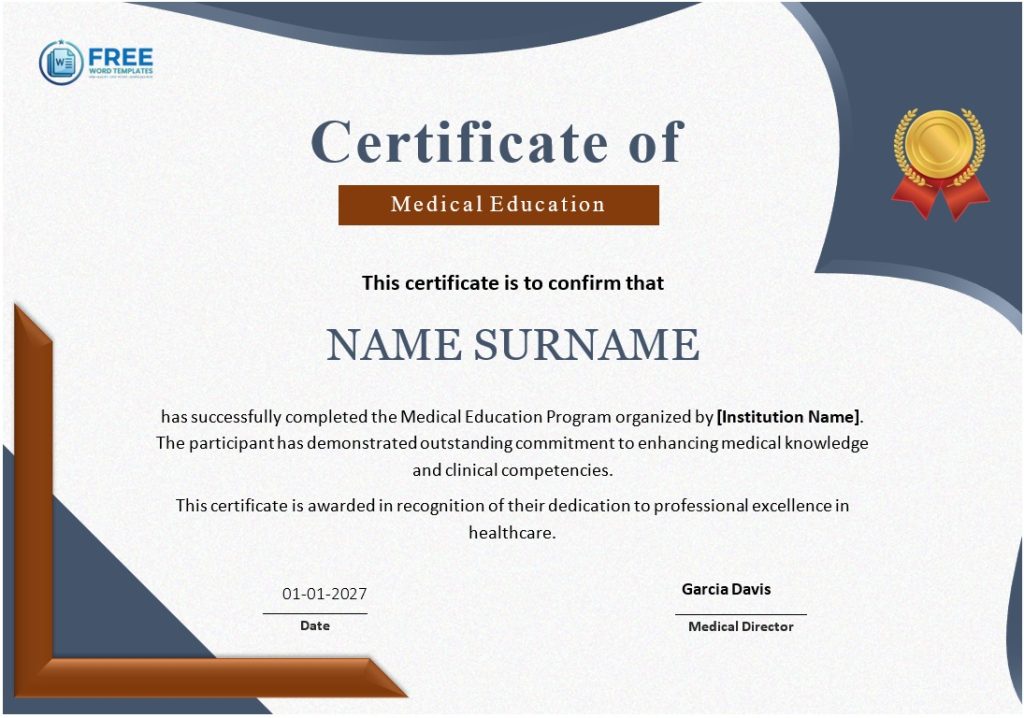
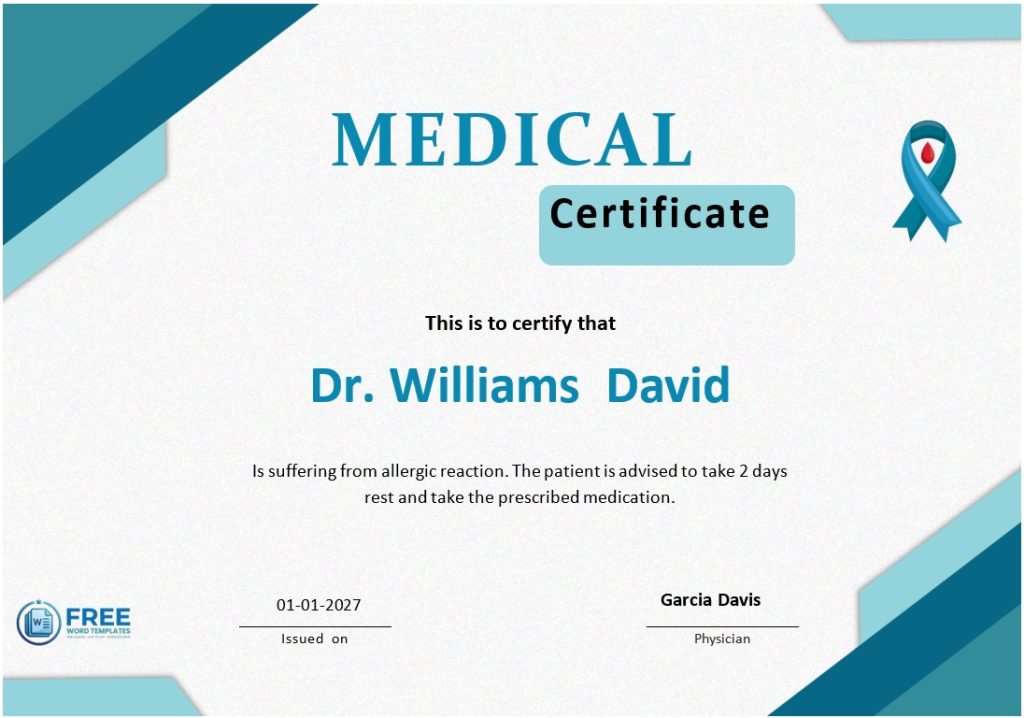
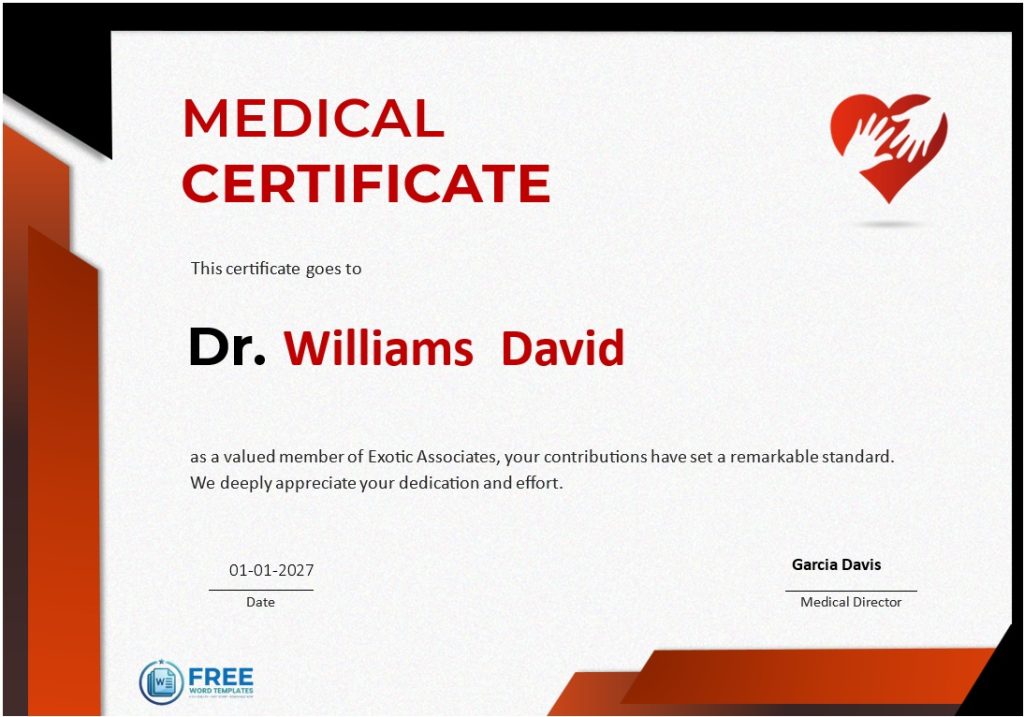
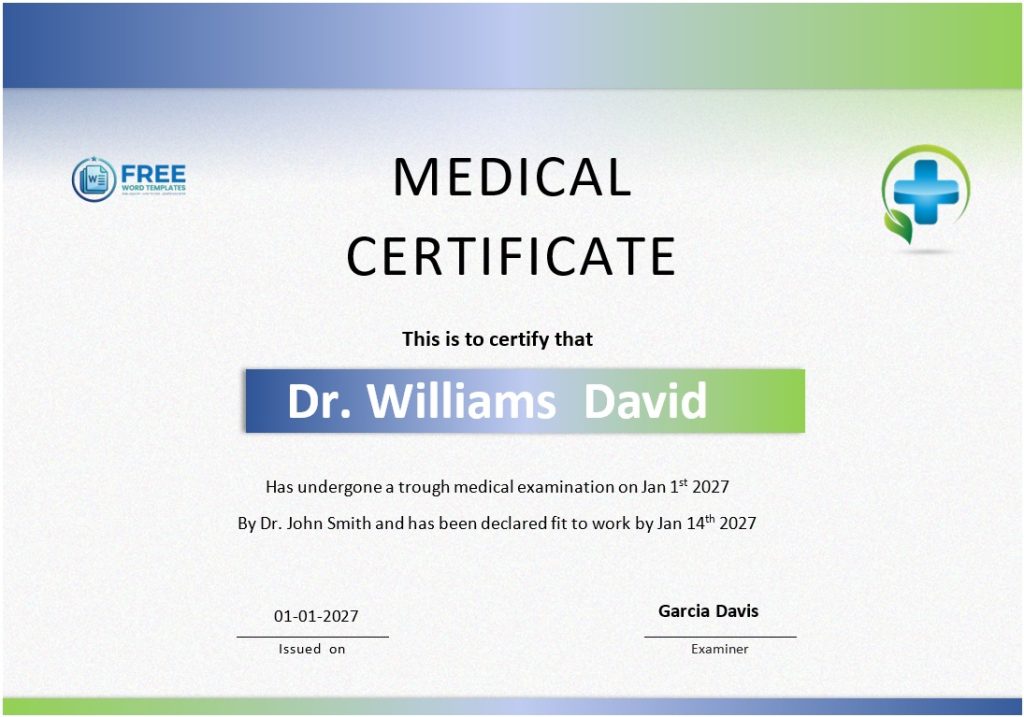
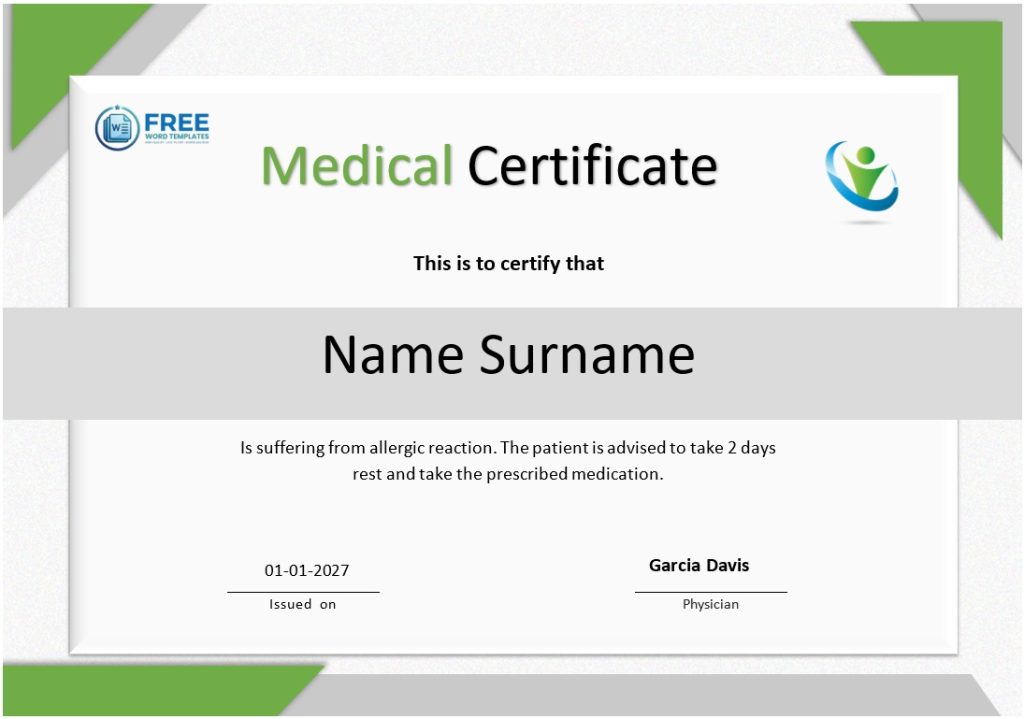
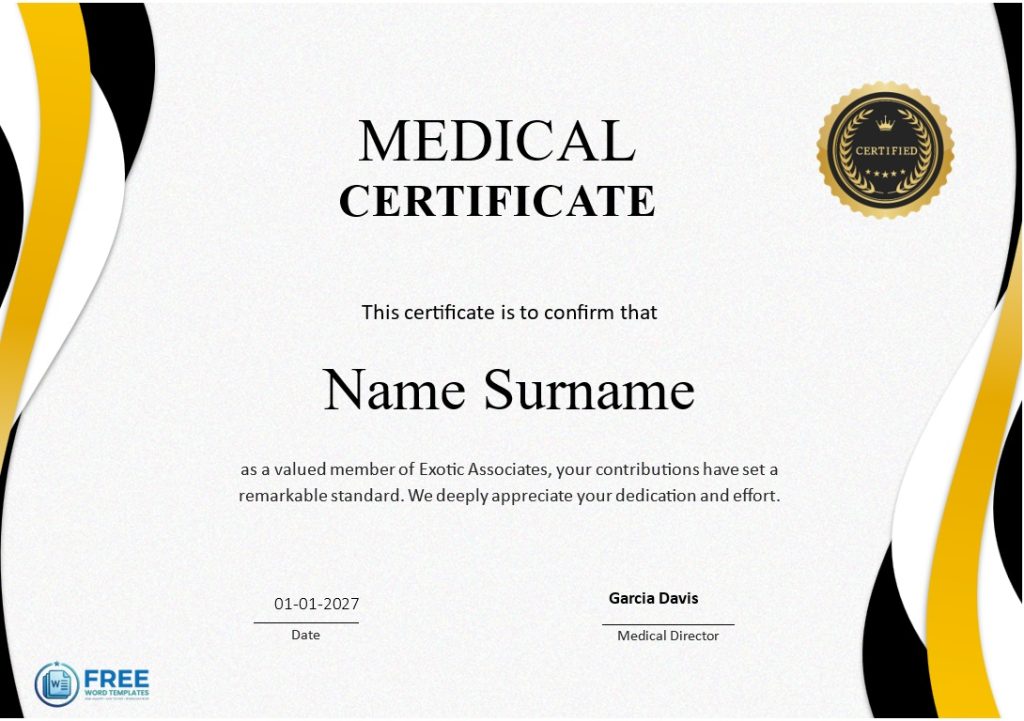
Free Medical Certificate Templates
The formats below are editable in Word for practices preparing their own documentation. Add your practice letterhead, registration details and numbering before use.


Wording: Fit, Unfit, Fit With Restrictions
Three conclusions, and the wording matters because employers act on it.
Unfit. “In my opinion the patient is unfit for work from [date] to [date] inclusive.” State the period, not a duration. If the patient may be fit sooner, say the certificate covers “up to and including” the end date and that earlier return is at the patient’s and employer’s discretion.
Fit. “In my opinion the patient is fit to resume their normal duties from [date].” Avoid open-ended fitness statements about roles you haven’t assessed — you’re confirming fitness for the duties described to you, not for anything the employer may later assign.
Fit with restrictions. The most useful category and the most under-used. Describe the restriction in functional terms the employer can act on — “no lifting above 5 kg”, “no driving”, “no work at height”, “maximum four hours per day for two weeks”, “seated duties only” — rather than in clinical terms. An employer cannot act on a diagnosis; they can act on “no lifting above 5 kg”.
Where a phased return is appropriate, say what the phasing is and for how long, and note when you’ll review it.
How Much to Disclose
The judgement that most often goes wrong, in both directions.
A certificate should contain the minimum clinical information necessary for its purpose. An employer needs to know that the patient is unfit, for how long, and what they can and cannot do on return. They do not need the diagnosis, the investigations, the medication, or the history — and including them may breach data protection and confidentiality obligations, quite apart from the harm it can do the patient.
Where a recipient genuinely requires a diagnosis — some insurers and statutory schemes do — obtain the patient’s explicit consent first, and record that consent. The patient should know what is being disclosed and to whom before the certificate leaves the practice.
Two points that are easy to miss. Mental health conditions warrant particular care: a general statement of unfitness usually serves the purpose without naming a condition the patient may not wish disclosed to a line manager. And be careful with certificates for minors — confirm who is entitled to receive it before issuing.
If the patient asks for wording you consider inaccurate, or for a period you haven’t assessed, the answer is no. A certificate is your professional statement, not an administrative favour.
Signature, Registration and Authentication
- Sign every certificate personally. Not a stamp of a signature, not a signature applied by administrative staff.
- Include your registration or licence number. This is what lets a recipient verify the certificate with the relevant register, and its absence is the first thing that makes an employer suspicious.
- Print your name and qualifications beneath the signature — signatures are rarely legible.
- Date the signature separately from the date of assessment. They aren’t always the same day, and the difference can matter.
- For electronic signatures, use a method that records identity and timestamp. A pasted image of a signature offers no authentication and is easily copied from any previous certificate.
- Number your certificates and keep a register — date, patient, period covered, practitioner. It lets you confirm a certificate when a recipient calls, and it identifies anything presented in your name that you didn’t issue.
- Keep a copy in the clinical record.
Common Faults
- Vague dates — “two weeks” rather than explicit inclusive dates. The commonest reason a certificate is queried.
- Too much clinical detail, disclosing more than the purpose requires.
- Too little to act on — “unfit for work” with no return date and no restrictions leaves the employer unable to plan.
- Restrictions in clinical language the employer can’t translate into duties.
- Missing registration number.
- Backdating. Where a certificate covers a period before the assessment, say so explicitly — “the patient reports being unable to work since [date]” — rather than implying you assessed them then.
- No indication of the assessment type, where the consultation was remote.
- Using a general template when a statutory form applies. Check the requirement first.
- Inconsistent house format across a practice, which makes verification harder and forgery easier.
Related documentation: certificates of completion and training certificates for CPD and course records, and no objection certificates for institutional permissions.
Frequently Asked Questions
What is a medical certificate?
A statement by a registered health practitioner confirming a patient’s condition, fitness for work or study, or need for absence. It has effect because a named, registered clinician who assessed the patient has signed it.
What must a medical certificate contain?
The practice details, the practitioner’s name, qualifications and registration number, the patient’s name and identifier, the date and type of assessment, explicit start and end dates for the period covered, the conclusion on fitness, any restrictions, and a personal signature with the date of signing.
Should a medical certificate state the diagnosis?
Usually not. Employers need to know that the patient is unfit, for how long, and what they can and cannot do on return — not the diagnosis. Where a recipient genuinely requires clinical detail, obtain and record the patient’s explicit consent first.
How should restrictions be worded?
In functional terms the employer can act on — “no lifting above 5 kg”, “no driving”, “seated duties only”, “maximum four hours per day for two weeks”. An employer cannot act on a diagnosis, but can act on a stated limitation.
Can a medical certificate be backdated?
A certificate should reflect what the clinician assessed and when. Where it covers a period before the consultation, that should be stated explicitly — “the patient reports being unable to work since [date]” — rather than implying an earlier assessment took place.
Who can issue a medical certificate?
A registered medical practitioner, and depending on jurisdiction and purpose, other registered professionals within their scope — dentists, physiotherapists, occupational health physicians, psychiatrists, and in some countries nurses or pharmacists for short-term absence.
Why does the registration number matter?
It allows the recipient to verify the certificate against the relevant professional register. Its absence is the first thing that makes an employer or insurer doubt a document.
Is a downloaded template a valid medical certificate?
No. A template supplies layout only. The certificate’s standing comes entirely from a registered practitioner who assessed the patient, signed it, and recorded their registration details.

Pete Smith is a Business Management graduate and a passionate advocate for practical, accessible resources that empower professionals and entrepreneurs to succeed. With a strong foundation in organizational strategy and operational efficiency, Pete combines academic knowledge with real-world insights to simplify complex business processes. He is the creator behind a growing online platform dedicated to offering free, high-quality documents, templates, and actionable tips designed to save time and improve productivity.