A receipt is proof that a payment was made. Whoever receives the money issues it, and whoever paid keeps it — for returns, expense claims, warranty cover, tax records, or simply to prove the matter is closed. The free templates below cover general bill and payment receipts in MS Word, and further down you’ll find a directory pointing to the right format for rent, donations, cash payments, and point-of-sale purchases.
Receipt, Invoice, or Bill?
Three words used loosely in conversation and precisely in accounting:
- An invoice (or bill) is a request for payment. It’s issued before the money arrives and creates an amount owed.
- A receipt is confirmation that payment was made. It’s issued after the money arrives and closes the amount owed.
- A bill payment receipt is simply a receipt that references the bill it settles — which is what makes it useful, because it lets both sides match the payment to the right invoice without guessing.
Most transactions produce both documents. The invoice opens the transaction; the receipt closes it.
What Every Receipt Must Include
- The word “Receipt” and a sequential receipt number — the numbering is what makes a set of receipts auditable.
- Date the payment was received.
- Who received it — your business name, address, contact details, and tax registration number where required.
- Who paid — the customer’s or payer’s name.
- What the payment was for — a description, and where it settles a bill, the invoice number it relates to.
- Amount received, in figures and words. Words are the old safeguard against a figure being altered afterwards, and they still earn their place on handwritten and cash receipts.
- Payment method — cash, card (last four digits only), bank transfer with reference, or cheque with its number and bank.
- Balance remaining, if the payment is partial. Showing amount paid and balance due prevents the argument later.
- Signature of the person receiving payment, and your stamp if you use one.
Bill Payment Receipt Sample
HARBOUR STREET SERVICES LTD.
14 Harbour Street, Springfield | (555) 014-9210
Tax Reg: 12-3456789
PAYMENT RECEIPT
Receipt No: R-2026-0518 Date: 9 September 2026
Received from: Meridian Consulting Ltd.
In settlement of: Invoice INV-2026-0231 dated 29 August 2026
Amount received: $6,685.20
(Six thousand six hundred eighty-five dollars and twenty cents only)
Payment method: Bank transfer, ref MER-0231
Invoice total: $6,685.20 | Balance due: Nil — paid in full
____________________
D. Ferreira, Accounts
The line that makes this a bill receipt rather than a generic one is “in settlement of: Invoice INV-2026-0231.” That single reference lets your customer’s accounts team close the right payable and lets yours close the right receivable, without anyone reconciling from memory.
Free Bill and Payment Receipt Templates
Each template below is editable in Word. Set up your business details once, save a master copy, and change only the receipt number, payer, and amount for each payment.
Bill Payment Receipt Template
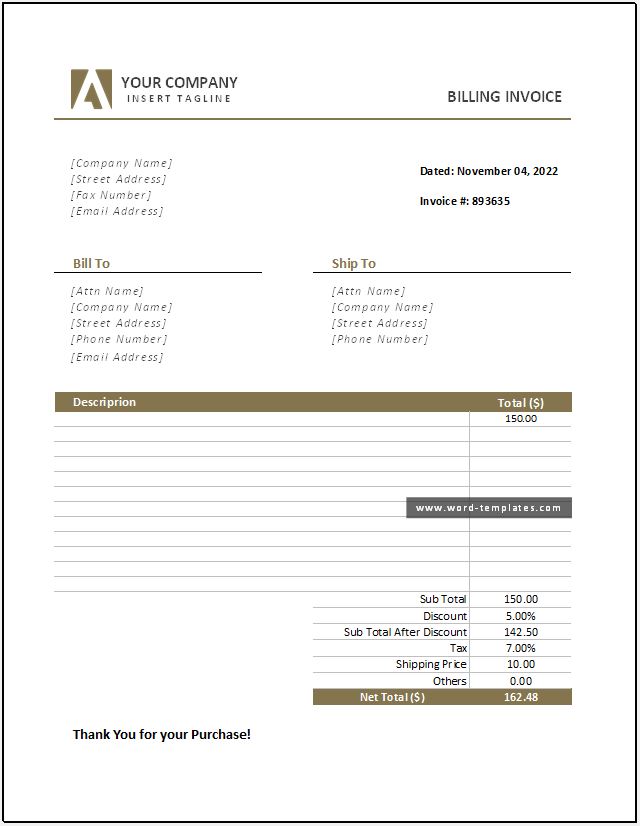
The layout shown above — payer, invoice reference, amount in figures and words, payment method, and balance due.

Invoice Receipt Template
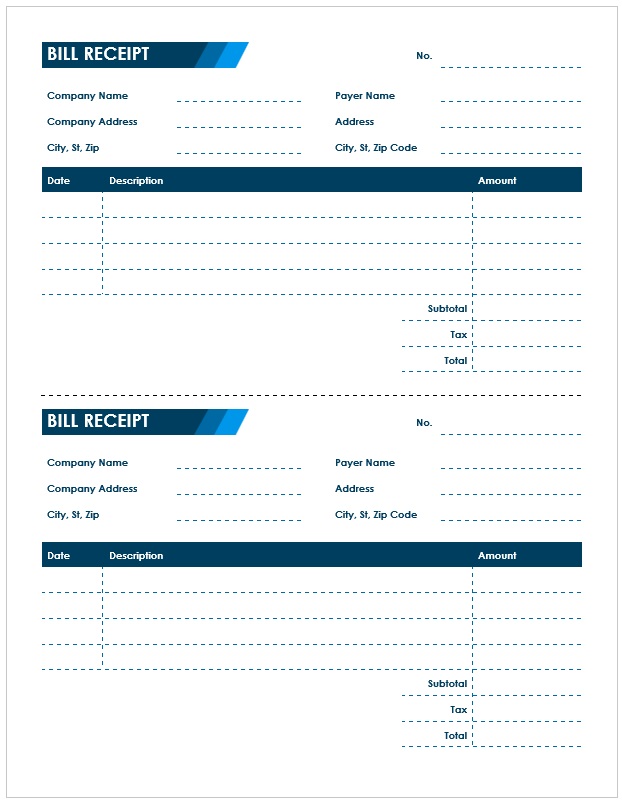
Built around a named invoice — settles a specific bill and shows the remaining balance where the payment is partial.
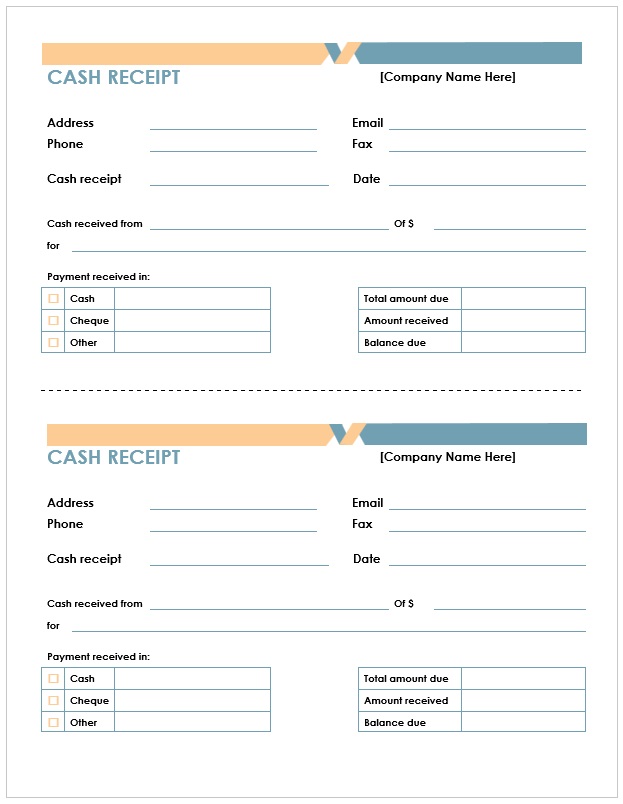
Here is the download link for this Cash Receipt Template in MS Word format.
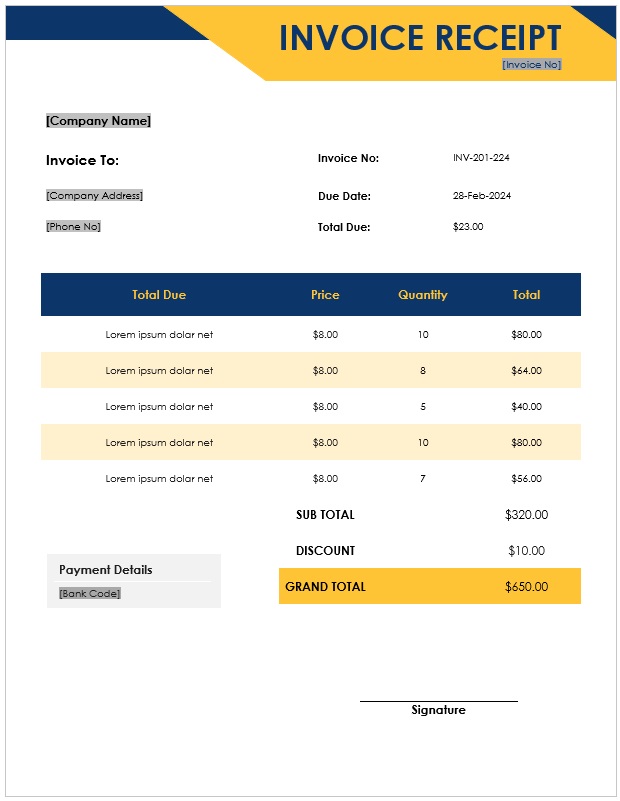
You can download this Invoice Receipt Template from the link below.
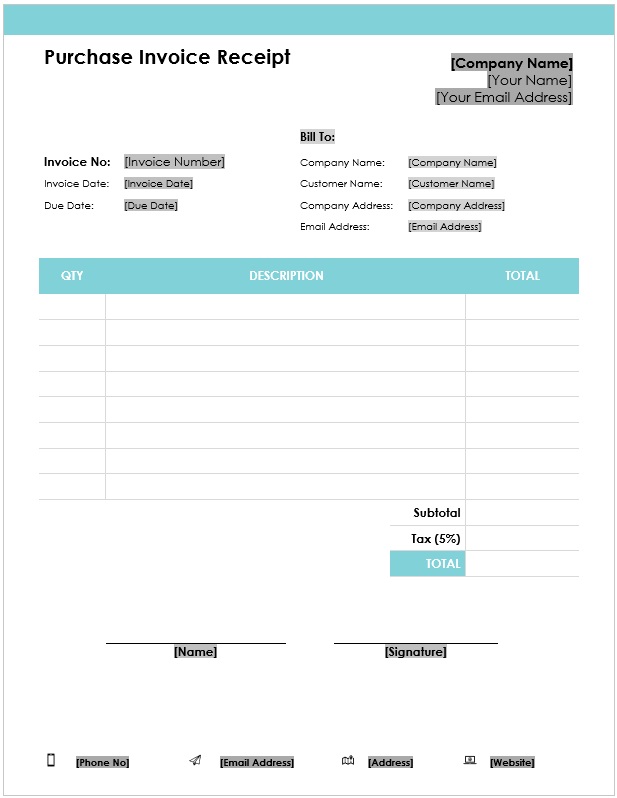
Here is the download link for this Purchase Invoice Receipt Template in MS Word format.
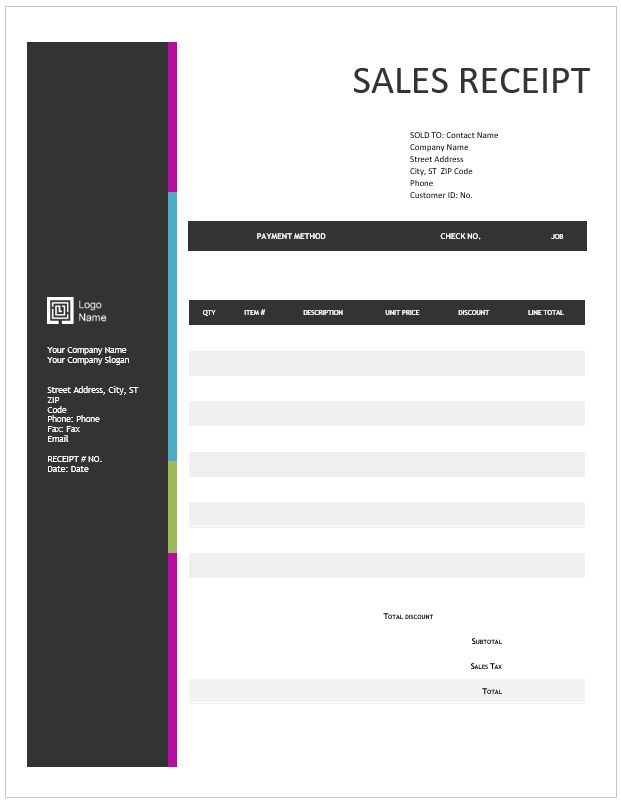
Which Receipt Do You Need?
“Receipt” covers several documents that look similar and are used in different situations. Pick the one that matches what actually happened:
- Paying off an invoice or account — the bill payment receipts on this page. They reference the invoice being settled.
- Money handed over in cash — rent, wages, deposits, advances, service payments. See our cash receipt templates, which cover amount-in-words practice and receipt books.
- A retail or counter sale — itemized goods with tax, tendered amount and change, and your returns policy. See the sales receipt templates.
- Rent paid by a tenant — needs the property address and the rental period covered, which generic receipts omit. See the rent receipt templates.
- A charitable donation — requires specific tax wording about goods and services provided. See the donation receipt templates.
When in doubt, the test is what the payment was for. The fields change; the principle doesn’t.
Receipt Numbering and Receipt Books
A few habits turn a pile of receipts into records you can actually rely on:
- Number sequentially, with no gaps. Missing numbers are the first thing anyone reviewing your books will ask about. A year-prefixed series like R-2026-0001 keeps things tidy across years.
- Keep a copy of every receipt issued — a carbon duplicate book, or print two and file one.
- Never alter an issued receipt. If something was wrong, mark the original cancelled, keep it, and write a fresh one with a new number.
- Mark spoiled receipts cancelled and leave them in the book rather than tearing them out.
- File by month, and retain for as long as your tax authority can query the period — the retention rule varies, so check the one that applies where you operate.
- Emailed receipts count, provided they carry the same information. Keep what you sent, not just the fact that you sent it.
Frequently Asked Questions
What is a bill receipt?
A receipt issued when a customer pays a bill or invoice. It confirms the amount received and references the invoice being settled, so both parties can match the payment to the right transaction.
What is the difference between a bill and a receipt?
A bill (or invoice) requests payment before it’s made. A receipt confirms payment after it’s made. The bill opens the transaction; the receipt closes it.
What should a payment receipt include?
A sequential receipt number, the date, your business and tax details, the payer’s name, what the payment was for including any invoice reference, the amount in figures and words, the payment method, any remaining balance, and a signature.
Is a handwritten receipt valid?
Yes — validity depends on the content, not on how it was produced. Include the same fields you would print, sign it, and keep a duplicate. A printed template simply makes it faster and stops fields being forgotten.
Do I have to give a receipt for every payment?
Requirements vary by country and by payment method — some jurisdictions mandate receipts for cash transactions or on request. Beyond the legal position, issuing one every time is simply good practice: it settles disputes in seconds and keeps your own records complete.
How long should receipts be kept?
For as long as your tax authority can query the period they relate to, which is commonly several years. Keep the business’s retained copies filed by month; customers should keep theirs at least until any return or warranty period has expired.
Can I send receipts by email?
Yes. An emailed or PDF receipt carries the same weight as a printed one provided it contains the required details. Save a copy of what was sent, and keep the numbering sequence continuous across printed and emailed receipts alike.

Pete Smith is a Business Management graduate and a passionate advocate for practical, accessible resources that empower professionals and entrepreneurs to succeed. With a strong foundation in organizational strategy and operational efficiency, Pete combines academic knowledge with real-world insights to simplify complex business processes. He is the creator behind a growing online platform dedicated to offering free, high-quality documents, templates, and actionable tips designed to save time and improve productivity.