A certificate of origin (CO) is an international trade document that certifies the country in which exported goods were manufactured or produced. Customs authorities in the importing country use it to apply the correct tariffs, enforce trade rules, and — under trade agreements — grant reduced or zero duty rates. The exporter fills it out; in most countries a chamber of commerce then certifies and stamps it, which is what makes the document official. The free templates below are editable MS Word documents covering the standard layout, and beneath them you’ll find every field explained, plus the difference between ordinary and preferential certificates — a distinction that determines whether a generic template is usable at all.
When a Certificate of Origin Is Required
Not every shipment needs one, but three situations reliably do: the importing country’s customs requires it for the product category (common for textiles, food, and regulated goods); the buyer’s letter of credit lists a CO among the required documents — banks check documents literally, so a missing or unstamped CO can hold up payment; or the importer wants to claim a preferential tariff rate under a trade agreement between the two countries. The CO travels with the rest of the export document set — the commercial invoice, the packing list, and the transport documents — and its details (invoice number, marks, quantities) must match those documents exactly, because customs officers compare them line by line.
What a Certificate of Origin Looks Like
The standard CO is a boxed, single-page form. Here’s the skeleton — the templates below follow this layout:
Certificate No: __________ Date: __________
________________________
________________________
________________________________________________________________
Invoice No: __________ Invoice Date: __________
____________________
Name, title, date
____________________
Stamp / seal
The Standard Fields, Explained
- Exporter and consignee — full legal names and addresses, matching the commercial invoice exactly. Mismatched names between documents are among the most common causes of customs queries.
- Transport details — vessel or flight and the ports of loading and discharge, taken from the transport booking.
- Marks and numbers — the shipping marks printed on the packages, so customs can physically match cartons to paperwork.
- Description of goods, quantity, and weight — specific commercial descriptions (not just “garments” but “men’s cotton knitted T-shirts”), with quantities and gross/net weights matching the packing list.
- Invoice number and date — ties the certificate to the specific commercial transaction.
- Origin declaration — the sentence that is the document’s entire purpose: a declaration that the goods were produced or manufactured in the named country.
- Exporter’s signature and chamber certification — the exporter signs the declaration; the chamber of commerce (or another authorized body) stamps and countersigns. In most trade lanes, the stamp is what importing customs and banks actually check — a template printed and signed without certification is usually not acceptable, so plan the chamber step into your shipping timeline.
Non-Preferential vs. Preferential Certificates of Origin
This distinction decides whether a generic template can be used at all:
- Non-preferential (ordinary) CO — simply certifies where the goods were made, with no tariff benefit attached. Used for customs formalities, letters of credit, and destination-country requirements. This is what the templates on this page are for — the layout is conventional rather than legally prescribed, and chambers accept well-prepared standard formats.
- Preferential CO — claims a reduced or zero tariff under a specific trade agreement between the exporting and importing countries. These almost always require the agreement’s own prescribed official form, issued or endorsed through the designated authority — a generic template cannot substitute for it. If your buyer is claiming a preference, ask them which agreement and form applies, and obtain that form from your chamber or trade authority.
Stating this plainly saves exporters real trouble: the most expensive CO mistake isn’t a formatting error — it’s shipping with an ordinary certificate when the buyer needed the preferential form, and losing the duty saving that justified the deal.
Free Certificate of Origin Templates in MS Word
The templates below follow the standard non-preferential layout shown above. Fill in your shipment details, check every field against your invoice and packing list, print, sign — and take the certificate to your chamber of commerce for stamping before dispatching documents. Many chambers now also offer electronic certification (eCO); the completed Word document works as the drafting format either way.
Standard Certificate of Origin Template (Boxed Form)
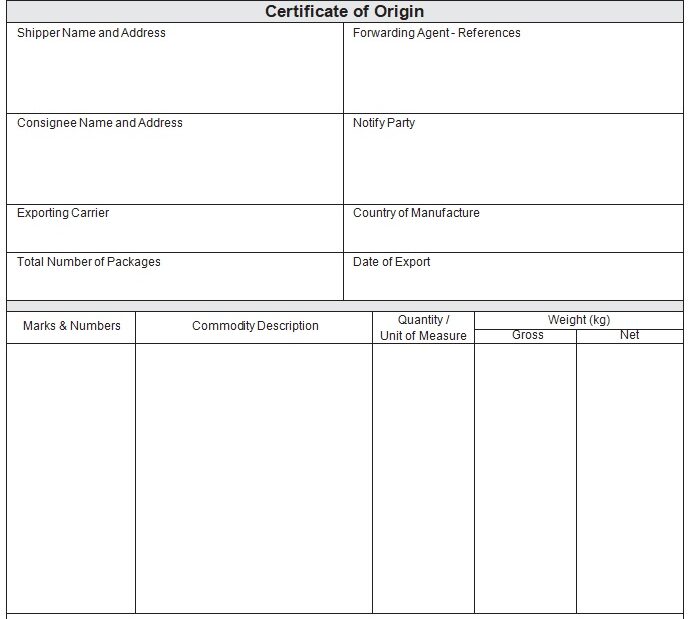
The conventional single-page boxed layout from the skeleton above — exporter, consignee, goods table, declaration, and certification blocks.

Certificate of Origin Template with Goods Table
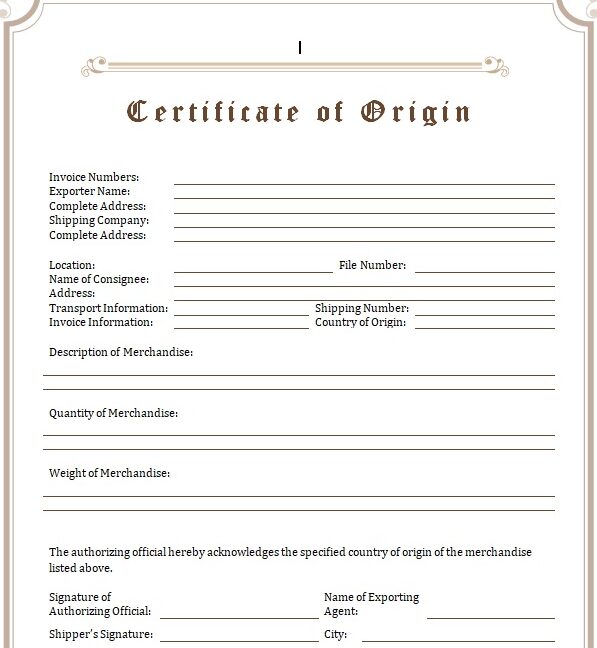
A version with an expanded multi-row goods table — for shipments with several product lines that each need description, quantity, and weight columns.
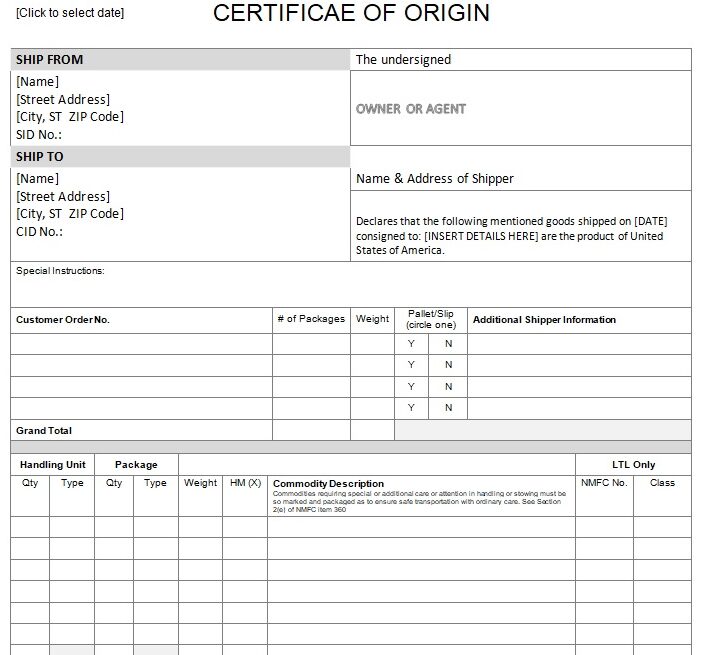
Please click on this button to grab this Certificate of Origin Template.
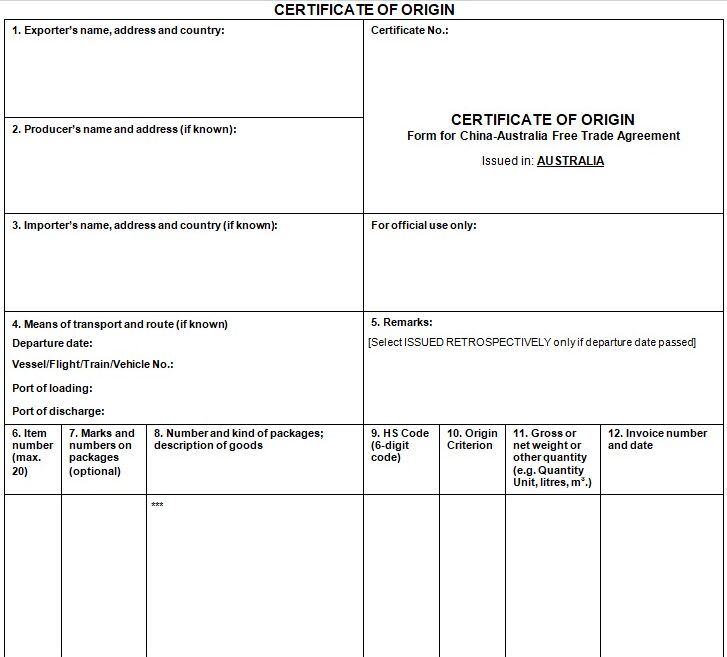
Please click on this button to grab this Certificate of Origin Template.

Please click on this button to grab this Certificate of Origin Template.
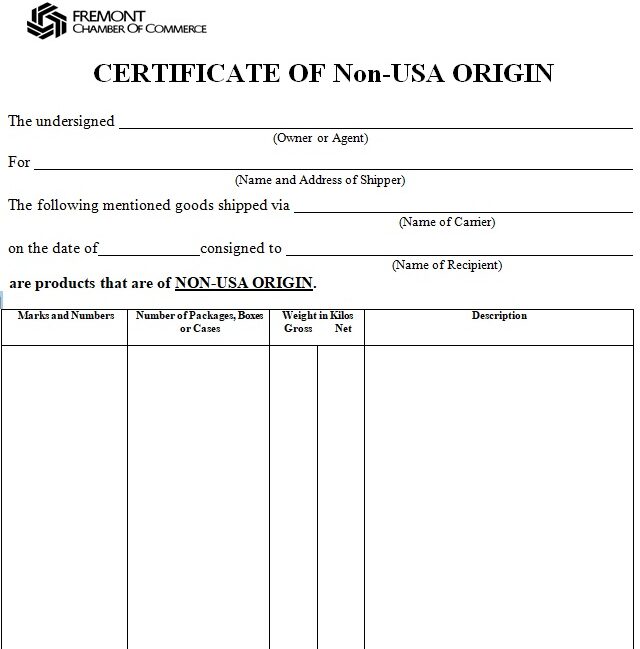
Please click on this button to grab this Certificate of Origin Template.
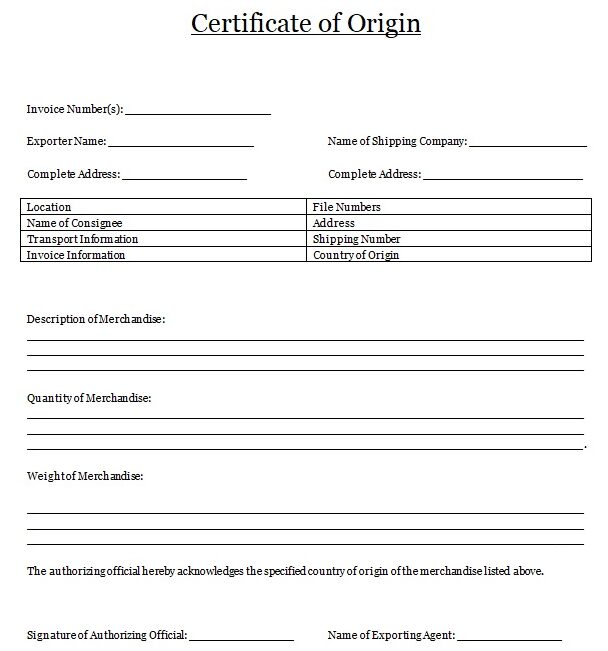
Please click on this button to grab this Certificate of Origin Template.
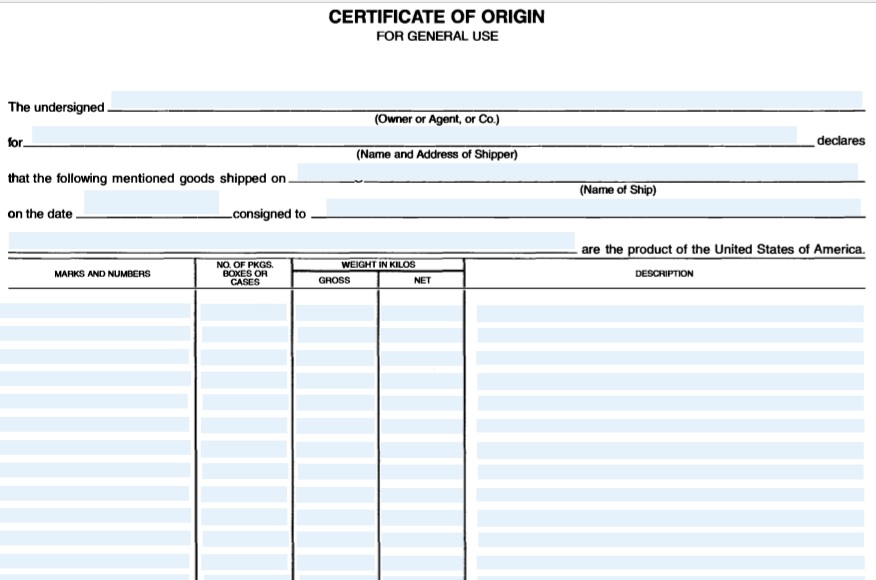
Please click on this button to grab this Certificate of Origin Template.
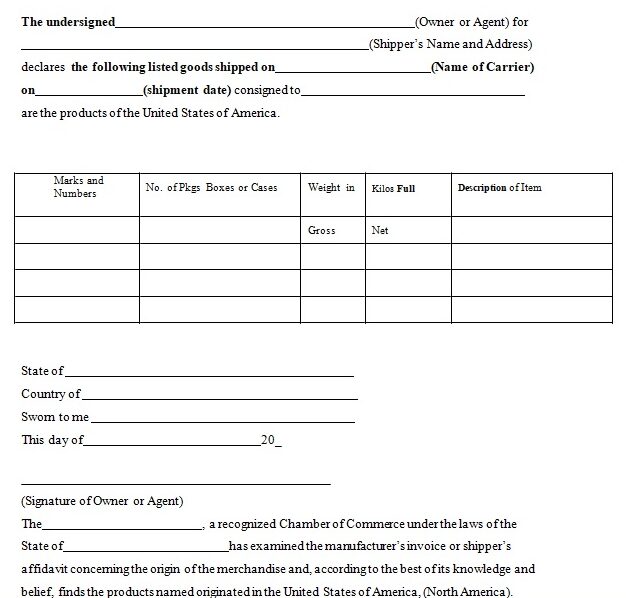
Please click on this button to grab this Certificate of Origin Template.
Frequently Asked Questions
What is a certificate of origin used for?
It certifies the country where exported goods were manufactured. Importing customs use it to apply the correct tariff and trade rules; banks check it when a letter of credit requires one; and under trade agreements, the preferential version is how importers claim reduced duty rates.
Who issues a certificate of origin?
The exporter completes and signs the form, but in most countries it becomes official only when certified — stamped and countersigned — by a chamber of commerce or another authorized body. Check your local chamber’s process and fees; many now offer electronic certification alongside the traditional stamp.
What is the difference between a preferential and non-preferential certificate of origin?
A non-preferential CO states origin for customs formalities with no tariff benefit — standard templates like the ones on this page cover it. A preferential CO claims reduced duties under a specific trade agreement and nearly always requires that agreement’s own prescribed form from the designated authority.
Is a certificate of origin required for every export?
No. It depends on the destination country’s rules, the product category, and the buyer’s documentary requirements — especially letters of credit. When in doubt, ask the buyer what their customs and bank require; providing an unneeded CO costs little, while missing a required one can strand a shipment.
Why do the CO details have to match the invoice and packing list?
Because customs officers and banks compare the documents line by line — names, invoice numbers, quantities, weights, and marks. Discrepancies trigger queries, delays, and (under letters of credit) payment refusals. Prepare the CO from the final invoice and packing list, never from memory or an earlier draft.

Pete Smith is a Business Management graduate and a passionate advocate for practical, accessible resources that empower professionals and entrepreneurs to succeed. With a strong foundation in organizational strategy and operational efficiency, Pete combines academic knowledge with real-world insights to simplify complex business processes. He is the creator behind a growing online platform dedicated to offering free, high-quality documents, templates, and actionable tips designed to save time and improve productivity.