A price list tells customers what things cost before they have to ask. Salons, tradespeople, freelancers, cafés and small shops all need one, and a good list does more than record numbers — it steers people toward the work you most want to do. The free templates below are editable MS Word files, and beneath them you’ll find how to lay prices out, what terms to include, and the lines that save the most arguments later.
What a Price List Is For
Three jobs, and it’s worth knowing which matters most to you:
- Removing friction. A lot of people won’t ask what something costs. A visible price list converts those people instead of losing them.
- Setting expectations. Prices agreed before work starts don’t get negotiated afterwards.
- Steering demand. What you list first, what you group together, and what you bundle all affect what people choose.
It also saves you repeating yourself. If you answer the same pricing question five times a week, that question belongs on a printed sheet and on your website.
How Prices Are Presented
Don’t right-align prices in a column. A neat column down the right edge invites customers to read the prices first and work backwards to the service. Put each price immediately after its item, in the same size and weight of type, so it reads as part of the description rather than as a figure to compare. The same principle applies on a restaurant menu, for the same reason.
Order deliberately. The first price someone sees sets their sense of what’s normal. Leading with your premium service makes the mid-range one look reasonable; leading with your cheapest makes everything after it look expensive. Neither is dishonest — but one of them is a decision and the other is an accident.
Group by what the customer wants, not by how you think about your work. A salon list should be organised by cut, colour and treatment, because that’s how someone arrives wanting something. A freelancer’s list should be organised by the outcome, not the deliverable type.
Use “from” prices for variable work — “From £45” — where length, size or complexity genuinely changes the cost. It’s honest, it avoids a nasty surprise at the till, and it gets people through the door to have the conversation.
Keep it short. A list of forty services is harder to buy from than a list of twelve with an “other treatments — please ask” line at the foot.
Three Tiers Beat a Flat List
Where your work allows it, offering three levels outperforms a single price, because it changes the customer’s question from whether to which.
Most people choose the middle option, so the middle option should be the one you actually want to sell. Price the top tier high enough that it makes the middle look sensible, and make sure the differences between tiers are concrete — more sessions, more revisions, a longer appointment, a better product — rather than vague descriptions of quality.
This works for services far more than for retail. A shop selling forty products doesn’t need tiers; a photographer, a consultant, a groomer, or a garden maintenance business almost always does.
Salon Price List Example
HARBOUR STREET
HAIR & BEAUTY · PRICE LIST 2027
CUTTING
Cut & finish 42 · 45 min
Consultation, wash, cut and blow dry
Restyle from 58 · 75 min
For a significant change of shape or length
Dry trim 26 · 25 min
COLOUR
Full head colour from 78 · 2 hr
Half head highlights from 85 · 2 hr 15
Root touch-up 48 · 75 min
TREATMENTS
Conditioning treatment 18 · 20 min · Olaplex add-on 24
Colour prices vary with hair length and thickness — a “from” price is a starting point and we’ll confirm before we begin.
A patch test is required at least 48 hours before any colour service, including for returning clients.
Please give 24 hours’ notice to change or cancel. Appointments cancelled with less notice, or missed, may be charged at 50%.
Prices valid from 1 January 2027 and include VAT.
Four things this does. Durations are shown, which is what customers are really booking. “From” prices appear where length genuinely changes the cost, with an explanation rather than just the word. The patch test requirement is stated on the price list, where clients will actually see it. And the cancellation policy appears before booking rather than being produced afterwards — which is the only way it can fairly be enforced.
Free Price List Templates in MS Word
Each template below is editable in Word. Set up your categories and terms once, then update only the prices each year.
Salon and Beauty Price List

Grouped by category with durations, “from” pricing, and a terms block for patch tests and cancellations.

Price List with Pictures

A product layout with an image beside each item — suited to retail, craft businesses, and anything customers choose by appearance.

Here’s the download button for this Price List Template.

Here’s the download button for this Price List Template.

Here’s the download button for this Price List Template.
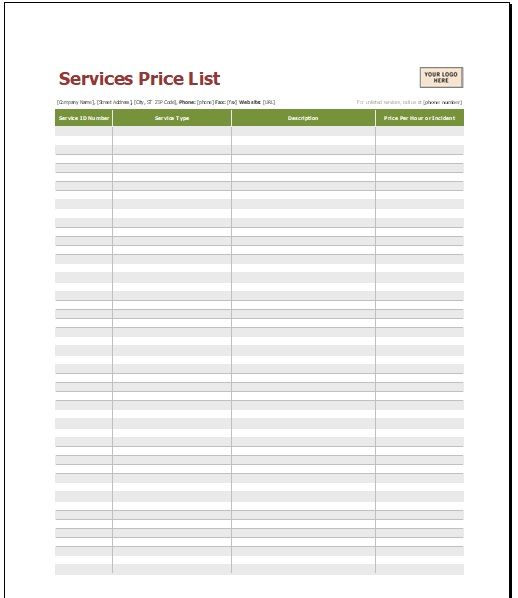
Here’s the download button for this Price List Template.

Here’s the download button for this Price List Template.

Here’s the download button for this Price List Template.
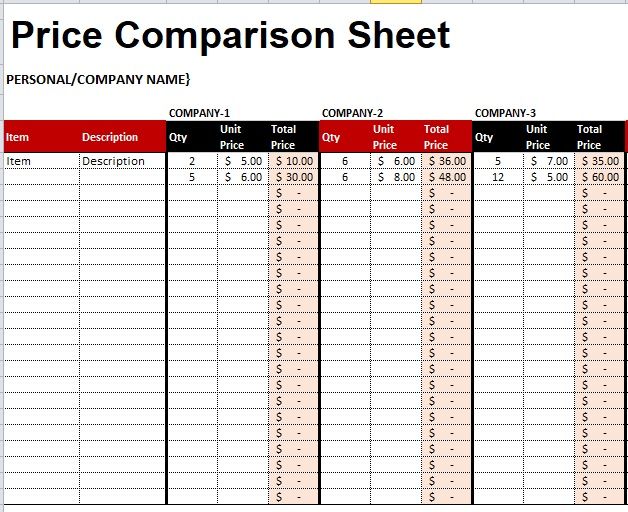
Here’s the download button for this Price List Template.

Here’s the download button for this Price List Template.
Price Lists for Freelancers
A freelance rate card has a job the others don’t: it has to define the edges of the work, not just the price. Scope creep is the main reason freelance projects lose money, and the price list is the cheapest place to prevent it.
State what’s included, specifically. Not “logo design — £600” but “logo design — £600: three initial concepts, two rounds of revision on the chosen route, final files in vector and raster formats, and a one-page usage guide.”
State what isn’t. Additional concepts, further revision rounds, rush turnaround, stock imagery, printing, and ongoing amendments after sign-off. Put a price against each where you can — “additional revision round: £120” is a far easier conversation than an awkward negotiation in week six.
Decide between day rate, project rate and hourly, and say which applies to what. Day rates suit ongoing or open-ended work; project rates suit defined deliverables and reward you for working efficiently; hourly suits small jobs and maintenance. Many freelancers publish a day rate and quote projects individually, using the rate card to anchor the conversation.
Include payment terms — deposit required, payment schedule, when final files are released. A deposit before work begins is standard and entirely reasonable to state up front.
For larger pieces of work the rate card becomes the basis of a business proposal, and the terms of the engagement belong in a service agreement.
Terms to Include
- Valid from date — “prices valid from 1 January 2027”. It lets you honour old prices deliberately rather than by accident, and it tells customers the list is current.
- Whether tax is included. State it explicitly. Consumer-facing businesses almost always show tax-inclusive prices; business-to-business lists usually show them excluding tax with a note.
- What affects a “from” price — length, size, complexity, travel — and a commitment to confirm the cost before starting.
- Deposit and cancellation policy for anything appointment-based. Notice period, what happens to a missed appointment, and whether a deposit is refundable. This is the single biggest protection an appointment business has, and it only works if customers saw it before booking.
- Travel or delivery charges, and the radius they apply within.
- Payment methods accepted, and any minimum card spend.
- The right to change prices — “prices subject to change; the price quoted at booking applies.”
Keeping Prices Current
- Review annually, at a fixed point in the year. Most small businesses leave price rises far too long and then have to make a large, noticeable jump — smaller regular adjustments are easier for customers to absorb and easier to explain.
- Check your costs first. Materials, wholesale prices, rent and wages all move, and a price held for three years is often a real-terms cut you didn’t decide to take.
- Give notice on a rise where you have regular customers. A month’s warning, with the reason stated plainly, produces far less friction than a surprise at the counter.
- Keep one master file and update it in one place — the printed list, the website and the booking system should never disagree, and they will if you edit them separately.
- Date every version and keep the old ones, so you can check what someone was quoted six months ago.
- Print a small batch. Twenty copies you can reprint beats two hundred that become wrong after the next review.
For the paperwork that follows a sale, see our invoice templates and quotation templates; for promotional offers on top of your list prices, the discount voucher templates cover the arithmetic.
Frequently Asked Questions
What should a price list include?
Each service or product with a short description and its price, durations where relevant, your business name and contact details, a valid-from date, whether tax is included, and the terms that apply — cancellations, deposits, travel charges, and what a “from” price depends on.
Should prices be in a column on the right?
No. A right-aligned price column invites customers to scan down the prices and choose by cost. Put each price directly after its item in the same type, so it reads as part of the description.
What order should items be listed in?
Group by what the customer is looking for, and order deliberately within each group. The first price someone sees anchors their sense of what’s normal, so leading with a premium option makes your mid-range one look reasonable.
Should I use “from” prices?
Yes, where the cost genuinely varies with length, size or complexity — and explain what affects it. A “from” price gets people through the door for the conversation, while a fixed price you then have to increase creates a bad first impression.
What should a freelance price list include?
What each fee covers in specific terms, what it doesn’t, the cost of common extras such as additional revisions or rush work, which rate model applies to which kind of job, and your payment terms including any deposit.
How often should I update my prices?
Review annually at a fixed point, after checking what your own costs have done. Most small businesses leave it too long and then need a large, noticeable increase — regular smaller adjustments are easier for customers to accept.
Should a price list show prices with or without tax?
Consumer-facing businesses normally show tax-inclusive prices, and in many places are required to. Business-to-business lists usually show prices excluding tax with a clear note. Either way, say which on the list.
Do I need a cancellation policy on my price list?
If you take appointments, yes. The notice period, what happens to a missed appointment, and whether deposits are refundable should appear where customers see them before booking — which is the only way the policy can fairly be applied afterwards.

Pete Smith is a Business Management graduate and a passionate advocate for practical, accessible resources that empower professionals and entrepreneurs to succeed. With a strong foundation in organizational strategy and operational efficiency, Pete combines academic knowledge with real-world insights to simplify complex business processes. He is the creator behind a growing online platform dedicated to offering free, high-quality documents, templates, and actionable tips designed to save time and improve productivity.